
In industrial fermentation production, hyperosmotic yeast is often used to produce erythritol. Most of the erythritol-producing bacteria are yeasts, and a small part are molds and bacteria. From the perspective of strain production capacity and product situation, high penetration resistant yeast is a more suitable strain.
synthesis path:
Under anaerobic conditions, glucose is converted into fructose 6-phosphate, and then further phosphorylated and decomposed into erythrose 4-phosphate and acetyl phosphate, and erythrose 4-phosphate is hydrolyzed by phosphatase to generate erythritol; Hyperosmotic yeast can also synthesize erythritol through the pentose phosphate pathway under aerobic conditions.
process flow:
Starch is used as raw material to obtain a matrix rich in glucose through enzymatic hydrolysis, which is fermented by infiltrating yeast or mold to produce a mixture of erythritol, a small amount of glycerol, ribitol and trace amounts of other polyols, which are filtered, concentrated, crystallized, separated, Dried and refined to obtain erythritol.
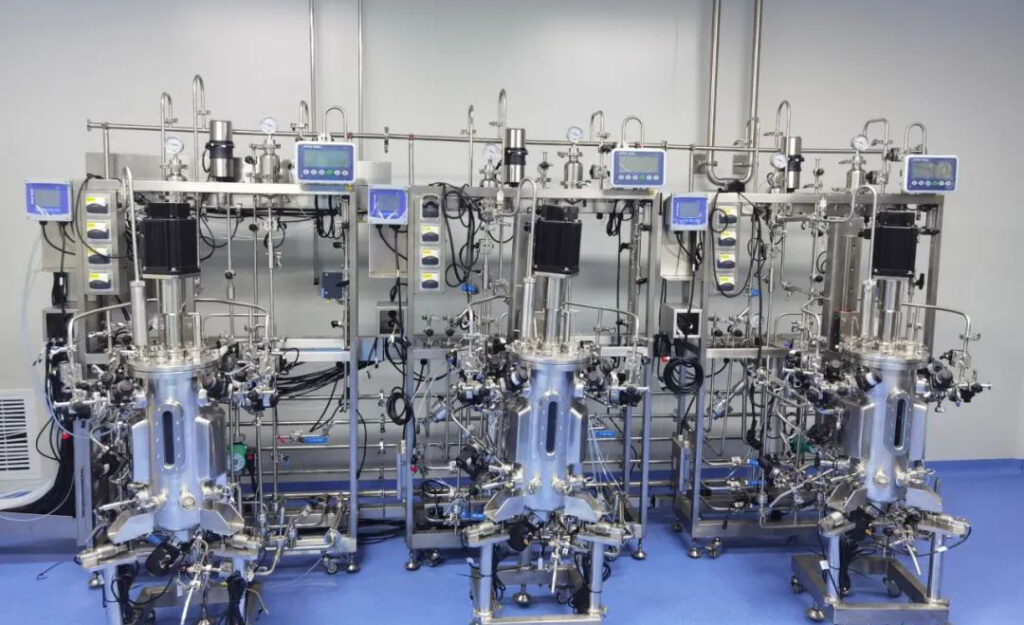
Fermentation control:
Air shaker speed: Under the condition of the same liquid volume, the oxygen supply of the strain was controlled by changing the shaker speed, and the shaker speed was finally determined to be 180r/min.
Fermentation temperature: The optimum temperature for this strain to ferment and produce erythritol under the optimum substrate concentration is 34°C. The optimum fermentation temperature is not consistent with the optimum growth temperature. The optimum growth temperature is 30°C. As the temperature increases or decreases, the growth period of yeast lags behind, and the production time of erythritol is also delayed. Therefore, the temperature is 30°C in the early stage of fermentation, and 34°C after 40 hours.
pH control: The pH value has a significant impact on the life activities of yeast. Hydrogen ions can change the charge of cell protoplasts. As the concentration of hydrogen ions changes, the absorption and utilization of nutrients by cells will also be affected. The growth of most yeasts is the fastest. The optimum value is 4.5-5.0, and this strain is suitable for growth and fermentation in the range of pH 4-6.5.
Ventilation: 0.5vvm (the ratio of the ventilation per minute to the actual volume of the tank), the dissolved oxygen is controlled to 30% during the growth period of the bacteria, and the dissolved oxygen is adjusted to 15% after 50h until the end of fermentation.
Foam: During the fermentation process, a large number of bubbles will be generated due to aeration and stirring, which will hinder the diffusion of oxygen in the fermentation broth and affect the respiration and metabolism of the bacteria. Therefore, defoaming must be carried out, and the methods include mechanical defoaming and chemical defoaming.
Downstream process
The main steps:
(1) Separation of fermentation broth bacteria
(2) Fermentation broth clarification and preliminary purification
(3) Fermentation broth decolorization and purification
(4) Concentration and crystallization of fermentation broth
(5) Pure erythritol produced by recrystallization