

Synthetic biology is an integrative discipline aimed at designing and constructing new biological parts, devices and systems, or redesigning existing biological systems to fulfil specific functions.
The chassis cell is an important concept in synthetic biology, which serves as the basic platform for constructing biosynthetic pathways or biological systems, carrying inserted exogenous genes or synthetic circuits that enable the reprogramming and regulation of cellular functions for the production of useful substances or the performance of specific tasks.
Definitions and concepts
A chassis cell is a host cell that has been modified or selected to have a specific genetic background and physiological characteristics that enable it to accept and stably express exogenous genes or synthetic biological circuits.
It is a ‘blank canvas’ that provides synthetic biologists with a basic framework on which various functional modules can be added to achieve desired biological functions or production goals.
Common chassis cell types
1. Escherichia coli (E. coli)
Characteristics: Rapid growth, its multiplication time is usually around 20 – 30 minutes in suitable culture medium, which can obtain a large amount of cell biomass in a short time, and is conducive to the rapid production of target products.
The genetic background is clear, its genome sequence has been completely sequenced, and there are in-depth studies on its gene regulation mechanism and metabolic pathways. This enables scientists to accurately genetically manipulate them and predict the effects of genetic modification.
Easy to perform gene manipulation, there are a variety of mature gene editing techniques and tools available, such as traditional plasmid transformation, gene knockout, gene insertion and other methods can be efficiently implemented in E. coli.
Application areas: Widely used in the production of recombinant proteins, amino acids, organic acids and other biochemical products, as well as the construction of biosensors and other synthetic biology applications.
For example, by introducing specific genes into E. coli, medicinal proteins such as insulin and growth hormone can be produced; E. coli is used to produce lactic acid by fermentation, which is used in food and chemical industries.
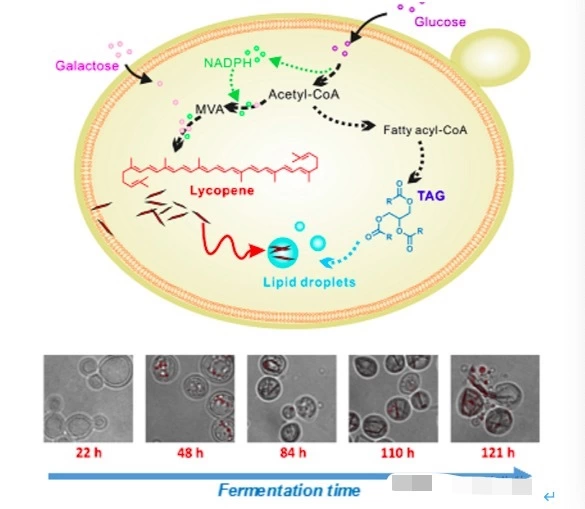
2.(Saccharomyces cerevisiae)
Characteristics: With eukaryotic cell structure and protein processing modification system, it is able to correctly fold and modify expressed eukaryotic proteins to give them activities and functions similar to those of natural proteins.
For example, for some complex glycoprotein production, Saccharomyces cerevisiae is able to carry out correct glycosylation modification, which is difficult to achieve in prokaryotic chassis cells.
Highly safe, brewer’s yeast has a long history of use in the food industry and is recognised as a safe microorganism (GRAS), suitable for the production of food additives, biopharmaceuticals and other products closely related to human health.
The fermentation process is mature, and it is easy to realise industrial production as it has accumulated rich fermentation experience and mature large-scale cultivation technology in traditional fermentation industries such as brewing and bread making.
Application areas: commonly used in the production of vaccines, biopharmaceuticals, industrial enzymes, biofuels (e.g., ethanol) and so on.
For example, in the field of biofuel, Saccharomyces cerevisiae can efficiently convert sugar into ethanol, which is an important strain for bioethanol production.
3.(Bacillus subtilis)
Characteristics: Strong secretory protein capacity, capable of efficiently secreting expressed proteins outside the cell, facilitating protein isolation and purification. This is a great advantage for the production of secreted protein products such as industrial enzymes, which can reduce downstream production costs.
Non-pathogenic, relatively safe for human body and environment, no special biosafety protection measures are required in the production process, suitable for large-scale industrial production.
Faster growth rate, able to reach a higher cell density in a shorter time and improve production efficiency.
Application areas: mainly used in the production of industrial enzymes (such as amylase, protease, cellulase, etc.), antibiotics, biosurfactants and so on.
For example, in the field of agriculture, some antibiotics and biosurfactants produced by Bacillus subtilis can be used for biological control of pests and diseases.
4. Filamentous fungi (e.g. Aspergillus niger, Aspergillus oryzae, etc.)
Characteristics: powerful protein secretion ability and complex protein post-translational modification ability, able to produce proteins and secondary metabolites with complex structure and diverse functions.
Able to grow on simple, low-cost medium, relatively low nutritional requirements, suitable for large-scale industrial production, which can reduce production costs.
The mycelial structure of filamentous fungi gives them good performance in solid fermentation, enabling them to better utilise the nutrients in the solid substrate, and the heat generated during the fermentation process can be easily dispersed, which is conducive to maintaining the stability of the fermentation process.
Application areas: in the food industry for the production of soy sauce, tempeh, citric acid and other fermented foods and food additives; in the industrial field for the production of cellulase, amylase, protease and other industrial enzyme preparations.