
Types, Uses, and Benefits of Tank Stirrers
A stirred tank reactor is also termed as a tank mixer or agitator. A mechanical device used for mixing, blending, or agitation of liquid solutions or slurries in tanks, it has been widely used in pharmaceuticals, food and beverage industries, chemical industries, and also in wastewater treatment industries among others.
There are different kinds of tank stirrers, each designed differently and offering varied features. The most common kinds include propeller stirrers, anchor stirrers, turbine stirrers, and magnetic stirrers.
Propeller stirrers: These have blades similar to the propeller of a boat and are for mixing low viscosity liquids. The anchor stirrer is appropriate for scraping off walls and bottoms of tanks for the application in viscous fluids. The turbine agitators are used when mixing fluids is required to be fast and are preferred by most in the pharmaceutical and chemical industry. A magnetic field makes a magnetic stir bar turn in the liquid content in a vessel, in magnetic stirrers.
The design of a tank stirrer depends on the nature of the liquid to be stirred. Thus, the selection of a tank stirrer should be compatible with the liquid being mixed to ensure efficiency.
Industrial processes involving tank stirrers include increased uniformity of mixtures, faster mixing times, reduced energy consumption, and improved product quality.
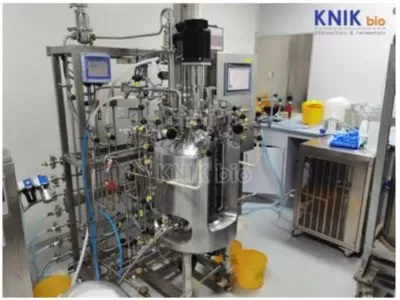
How They Work and How to Choose the Right One for Your Business?
A tank stirrer typically consists of a motor, a shaft, and an impeller or blade. When you switch on the motor, the impeller begins spinning very fast and produces a vortex that aids in the mixing of liquids within the tank.
There are many factors in choosing a tank stirrer for your business. Among those factors include the type of liquid to be mixed, the tank volume, viscosity of the liquid, and mixing speed.
For low viscosity liquids, the propeller continuous stirred tank reactors is ideal, while for high viscosity liquids, an anchor stirrer is preferred. A turbine stirrer is preferred in mixing liquids that need to be mixed at high speeds. Magnetic stirrers are used when it becomes impractical to have a shaft in the vessel.
Industrial Applications Guide
Tank stirrers have a variety of applications across several industries, including wastewater treatment, pharmaceuticals, chemical, and food and beverage.
In the food and beverage industry, mixers are used for stirring or blending ingredients to reach a homogenous product. Propeller mixers are mostly applied since the products are typically liquids with low viscosity.
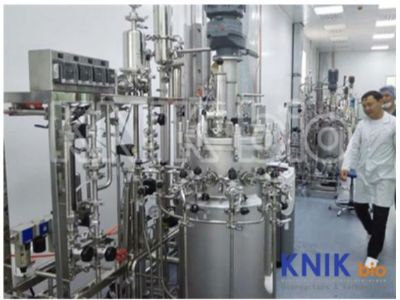
What’s the Difference and When to Use Each?
The difference in these types of tank stirrers is based on the blade or impeller design and the application for which each is used. This kind of mixer that is used is determined by required speed, viscosity of liquid, and the capacity of the tank.
The blades of the propeller agitators work at such a high speed that they create a vortex in dragging the liquid downwards and dispersing towards the surface. These are more suitable for low viscosity liquids like water and need gentle mixing.
Anchor stirrers also known as paddle stirrers have blades that scrape the wall and bottom of the tank thus with a flow ensures better mixing. They are suitable for the high viscosity liquids such as polymers and creams require slower mixing.
These are narrow blades with high speeds that create a localized movement in a medium. They are very good at mixing, hence producing a turbulent flow. They are used for very viscous solutions, like slurries, or when there is a need to dissolve a powder in a liquid quickly.
Summing it all up, stirred tank bioreactor are among the industrial equipment crucial to help in the mixing of liquid solutions and slurries. The various types of tank stirrers feature diverse designs and applications for their use. For example, there are propeller stirrers, anchor stirrers, turbine stirrers, and magnetic stirrers. Ensuring the right mixer for an application will highly affect the efficient mixing process. Also, the proper use and maintenance of the proper tank stirrer must be implemented to ensure maximum efficiency and durability.