
Bioreactors are essential instruments in research laboratories. They aid scientists in growing bacteria and other microorganisms. But how can researchers ensure that these machines are the right size and do the job well? It’s like coming across the perfect recipe, one that all the elements have to be in fine balances of one another to work. You can’t just put up a big bioreactor without testing to see whether it functions properly. KNIK recognizes the need for this balance and efforts to develop bioreactors that satisfy these needs.
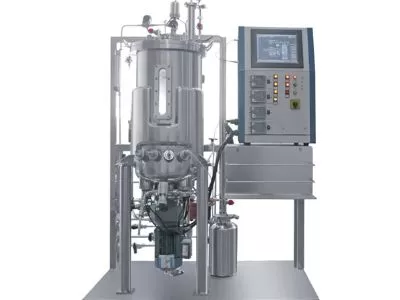
The Science of Bioreactor Sizing and Performance
Bioreactors vary in size from small devices that can fit on a laboratory bench to large ones employed in factories. How big a bioreactor is can affect how efficient it is at growing bacteria. A little bioreactor could be simpler to manage, but it might not provide enough bacteria for a big experiment. On the other hand, a large bioreactor can make more but can be more difficult to wrangle. It’s like riding a bike: you are going to want one that fits you properly. KNIK’s bioreactor knowledge allows these researchers to determine the right size for their needs so they can effectively conduct their experiments.
The Right Mix for Bacterial Cultures
Metaphor: You are cooking and you have to balance your ingredients (salt; sugar) to make your food taste good.” In bioreactors, scientists open that possibility by trading off size and performance. If a bioreactor is too little, it may not produce sufficient bacteria. But if it’s too large, it may be difficult to maintain the perfect conditions for the bacteria to grow. One challenge is that researchers need to figure out what size bioreactor will be best for their studies. KNIK thinks of this balancing act when designing its biotechnology bioreactors, and aims to help scientists get the most out of their bacteria.
Enhancing Bioreactor Performance in the Small-Scale Research Lab
It’s like tuning a musical instrument but for bioreactor performance. You want the notes to sound spot on. In the controlled environment of a research lab, scientists can turbocharge a bioreactor’s performance by messing with factors like temperature, stirring speed, and the nutrients they offer up to bacteria. Small tweaks can make a difference in how bacteria grow, as this phenomenon underscores. KNIK provides bioreactors that are equipped with tunable features that make it easy for users to adjust settings to star condition their bacterial cultures. By keeping track of these details, KNIK helps labs do better in their experiments.
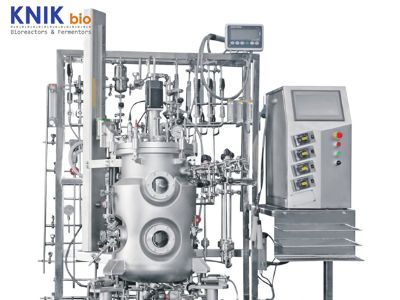
Impact of Bioreactor Size on Success of Bacterial Cultures
It’s not just about stuffing bacteria into a bioreactor; size influences how well they grow. In a batch bioreactor packed too tightly, the bacteria may not have space to reproduce. Too much space, on the other hand, might result in resources being squandered. It’s a little like planting seeds in a garden: you want a certain amount of room for the plants to grow properly. KNIK knows the importance of size when it comes to a successful bacterial culture- we make sure our bioreactors offer the perfect space for growth.
Key Aspects of Scaling-up Size and Performance of Bioreactors
Optimization of bioreactors for a balance of size and performance is a function of numerous factors. Temperature, nutrient availability and mixing rate are important. Every factor must be adequate for bacteria to grow well. It is like juggling balls: you need to keep them all up in the air and not drop one. KNIK is proud to offer bioreactors that facilitate this juggling act, so that scientists can concentrate on their work. With trusted and flexible bioreactors, KNIK enables labs to achieve the sweet spot for their own bacterial cultures.
In research labs, it is crucial to find the compromise between size and performance in bioreactors. Using KNIK’s skill, researchers can select the optimal bioreactor for them allowing for successful bacterial cultures and pioneering research.