
With the continuous advancement of science and technology, biological research is also developing. One of the important technologies is high-throughput technology, which allows researchers to obtain a large amount of data and information in a short period of time, thereby faster understanding of the internal mechanisms of living organisms. This article will introduce the concepts, applications, and prospects of high-throughput technologies.
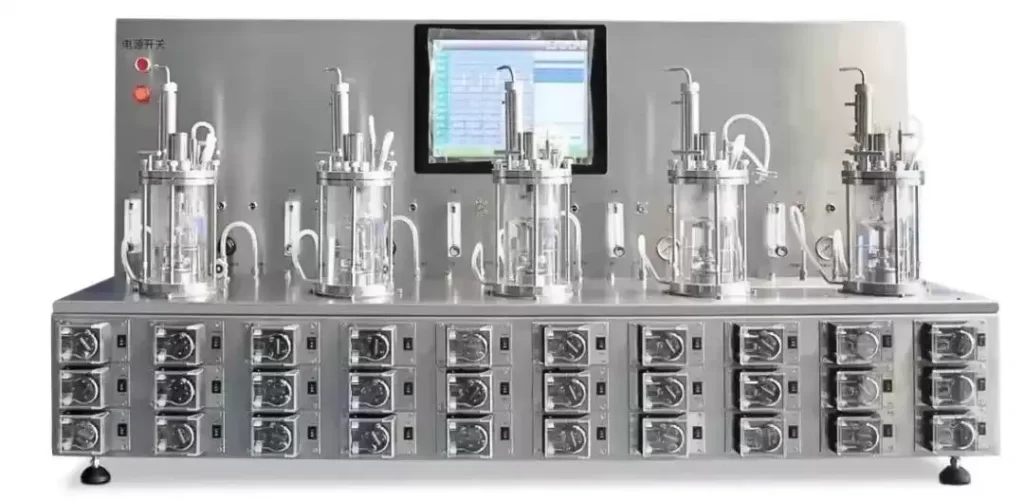
◆The concept of high-throughput technology
High-throughput technologies refer to a range of technologies that use automation and computer technology to speed up experimental processes and thereby acquire large amounts of data more quickly. These technologies are often used in research in various biological fields such as genomics, proteomics, and metabolomics. Using high-throughput technology, researchers can study the properties of hundreds or even thousands of molecules simultaneously, obtaining more data and information faster than traditional experimental techniques.
◆Advantage
❶Large-scale data analysis: Biological high-throughput technology can analyze thousands of samples simultaneously, even large-scale sample volumes can be easily handled.
❷Capable of capturing a small amount of sample information: information about viruses, pathogenic microorganisms and even single cells can be captured.
❸Provide a large amount of experimental data: Researchers can obtain a large amount of experimental data to quickly and accurately understand biomolecules, thereby promoting the research process.
❹High-throughput technology plays an important role in studying basic theories of life sciences and drug research and development.
❺A large number of test results can be obtained quickly, making research results between different laboratories highly comparable.
◆Application of high-throughput technology
•Application in biological research
High-throughput technology can analyze multiple aspects of biological samples, such as the DNA and RNA content in the sample, the type, content and composition of proteins in the sample, etc. These analyzes help biologists conduct more in-depth studies and comparisons of different types of cells, tissues, and organisms.
For example, single-cell sequencing is an emerging analytical technology that allows detailed analysis of a single cell. This technology provides new ways to study the function and development of cells. Using high-throughput techniques, biologists can analyze thousands of single cells to obtain detailed information about different cell types.
In addition, high-throughput techniques can be applied to analyze and compare different types of samples. For example, researchers can use high-throughput techniques to compare samples from healthy people and cancer patients to understand the differences between cancer cells and normal cells. This technology helps discover the biological signatures of cancer cells to develop more effective treatments.
•Applications in DNA and RNA sequencing
DNA and RNA sequencing are among the most commonly used high-throughput technologies in biological research. This technology can quickly and accurately determine the sequence of DNA or RNA, thereby helping researchers understand the function and expression of genes in cells and organisms.
In terms of DNA sequencing, high-throughput technology can quickly determine the sequence of millions of genes in an organism. By comparing sequence differences in genes between organisms, we can learn about differences in gene structure and function and determine which genes may be associated with specific traits and diseases.
RNA sequencing can help researchers understand the expression patterns of genes within cells. By comparing the expression levels of different types of non-coding RNAs and coding RNAs, we can analyze the functions and biological processes of different types of cells. In addition, RNA sequencing can also determine the responses and reaction mechanisms of cells under different environments.
•Applications in proteomics research
Proteomics is a high-throughput technology widely used in biological research. It can quickly determine the quantity, distribution and function of proteins in cells, allowing for a deeper understanding and analysis of changes in cellular functions and biological processes.
For example, protein mass spectrometry is a commonly used proteomics technique that can measure a wide range of proteins in cells. Using high-throughput technology, biologists can quickly analyze a large number of proteins and explore the relationship between the corresponding biological processes of the proteins, thereby gaining a deeper understanding of the mechanisms of life.
In addition, high-throughput techniques can provide helpful information on the structure and motion of protein molecules. For example, X-ray crystallography is a commonly used protein structure analysis technique that can study atomic-level details in protein structures. By using high-throughput technology, researchers can perform structural analysis on hundreds of different proteins, allowing researchers to better understand the dynamic changes in protein structure.
The rapid development of high-throughput technology has changed the pattern of biological research and has become an important part of modern life science research. In the future, high-throughput technology will continue to be improved and developed to make it faster, more accurate and more efficient. For example, high-throughput technology may be applied to high-precision biological operations such as gene editing and genome customization, thus having broader application prospects.
The introduction of high-throughput technologies has brought many new opportunities and challenges to biological research. With the efficient performance of the technology, researchers can understand the mechanisms in the body of life faster and more accurately, while also providing a foundation for future genetic manipulation, precise diagnosis and other fields. With the development of high-throughput technology, biological research will usher in broader prospects.