
The use of microbial fermentation to prepare active polysaccharides can make full use of the substances in the raw materials. During the fermentation process, high molecular substances that cannot be directly absorbed by the human body are decomposed into small molecules to produce new active substances, so that the active ingredients can play a better role and have a wide range of applications. Application prospects.
◆Microbial fermentation active polysaccharide
❶Polysaccharide
As a polymer compound with complex structure, polysaccharide is mainly composed of aldose and ketose through glycosidic bonds. It is a polymer composed of two or more monosaccharides in a certain proportion. Its branch chain connection forms are complex and diverse, and it has anti-tumor properties. , antioxidant, antibacterial, hypoglycemic and immunomodulatory and other biological activities, which are hot topics in the fields of food science, life science and medicine.
At present, polysaccharide extraction methods mainly include solvent extraction, enzyme extraction and ultrasonic extraction. The main principle is based on the physical properties of polysaccharide being insoluble in ethanol and easily soluble in water. However, the remaining substances after polysaccharide extraction will not be utilized. Discarded, resulting in waste of raw materials.
❷Microbial fermentation
Microbial fermentation is a type of biological transformation method. It refers to the use of intact microbial cells as biocatalysts to combine the enzyme production process and enzyme action process of microbial fermentation into one. Its essence is that exogenous compounds are contained in the biological system. Enzyme catalysis.
The type of catalytic reaction is complex, covering almost all in vitro organic chemical reactions, shortening the entire production cycle, reducing production costs, and improving the production efficiency of active polysaccharides.
❸Fermentation strains
The fermentation strains of active polysaccharides are generally edible fungi, Bacillus subtilis, Saccharomyces cerevisiae, Streptomyces, Bacillus clausii, etc. Breeding high-yielding strains and achieving large-scale production of polysaccharides is the first step in the preparation of polysaccharides by microbial fermentation. It is also an important problem in the development and widespread application of polysaccharides.
At present, the microbial extracellular polysaccharides that have been put into production in large quantities are mainly xanthan gum, dextran, thermocoagulable polysaccharide and gellan gum synthesized by Leuconostoc albicans, Pseudomonas, Xanthomonas, etc., as bioflocculant Agents, biosorbents, drug delivery agents, etc. are widely used in food, medicine, chemical and other industries.
◆Optimization of polysaccharide fermentation process
❶Optimization of culture media and culture conditions
From the perspective of optimizing the formula of the culture medium, the various carbon and nitrogen sources required for microbial growth will have different effects on their growth, resulting in deviations in the final polysaccharide yield. The culture conditions, such as temperature, pH and time, It largely determines the growth quality of microorganisms.
In order to maximize the fermentation efficiency, optimize the influencing factors such as carbon source, nitrogen source and inorganic salt concentration, and use polysaccharide yield and biomass as indicators to conduct experimental optimization of the culture medium. For example, for Aureobasidium pullulans, Using a variety of different carbon sources for culture, it was concluded that sucrose is the best carbon source for fermenting pullulan. Because when sucrose is used as the only carbon source, the conversion rate of synthetic pullulan is the most efficient, which has been generally recognized by scholars. their recognition.
❷Optimization of fermentation parameters and modes
At present, research on methods for preparing polysaccharides through microbial fermentation is still in its infancy. There are currently three most mainstream fermentation methods: solid-state fermentation, deep liquid fermentation, and two-way fermentation.
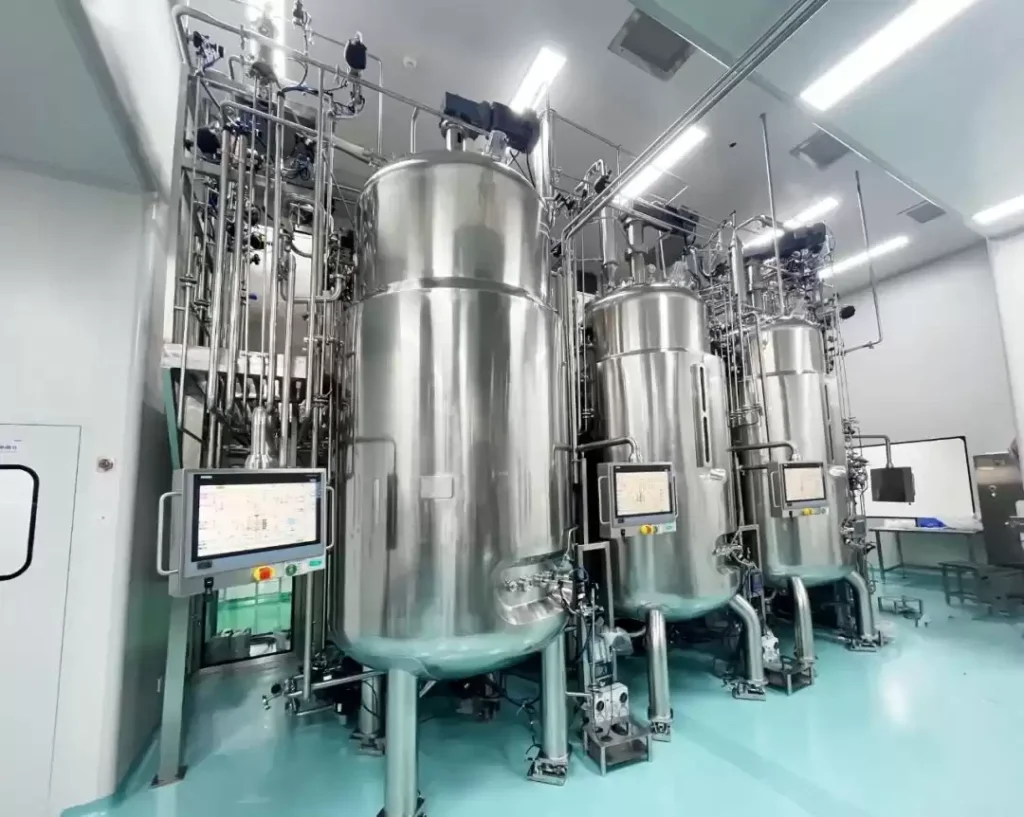
The fermentation principle of the liquid fermentation method is to inoculate bacterial cells into a liquid culture medium, and then separate and purify the polysaccharides produced by the bacterial cells from the components of the liquid culture medium to obtain the target product. Due to the characteristics of the liquid medium, the growing bacteria have the advantages of short production cycle and average bacterial age, which is more conducive to the improvement of production efficiency and the standardization of product quality.
The fermentation principle of the solid-state fermentation method is to first inoculate the bacteria in a liquid medium and culture them for a period of time to quickly increase the number of bacteria, and then transfer them to a solid medium for subsequent culture. The polysaccharides produced by this method are mainly concentrated in mycelium. in solid and solid culture media to facilitate product isolation operations.
The microbial fermentation method has its unique advantages. It can greatly increase the yield at low cost, have a short production cycle, is not affected by seasons, and has a simple production process. For the fermentation production of polysaccharides, the production cost and the efficiency of polysaccharide production are are two major factors that should be considered.
◆Biosynthetic pathways of bacterial polysaccharides
Although the synthesized polysaccharides have different types and quantities of monosaccharides, the main synthetic pathways of bacterial polysaccharides are very similar, which mainly include the following four steps: synthesis of precursor nucleotide sugars (activated form of monosaccharides), Initial reactions, extension, flipping and polymerization of repeating units and export of polysaccharides.
❶Synthesis of Precursor Nucleotide Sugars
Polysaccharides are mainly divided into two different types: homopolysaccharides and heteropolysaccharides. The nucleotide synthesis pathways of heteropolysaccharides are more complex and diverse. Although the synthesized polysaccharides have different types and quantities of monosaccharides, their biosynthetic pathways have similar steps.
Fructose is used as the carbon source for fermentation. After entering the cell, it is converted into fructose-6-phosphate, and then into pyruvate to enter the trihydroxyacid metabolic cycle. Using lactose as a carbon source, it is converted into glucose-6-phosphate by β-galactosidase, etc., and then enters the synthesis of nucleotide sugars.
The carbon sources, conversion structures, and key enzymes used in each pathway are different, but their synthesis processes all include α-glucosyl phosphomutase, UDP-glucose pyrophosphorylase, UDP-galactose 4- Epimerase and glucose phosphate isomerase. Therefore, gene cloning of phosphoglucomutase and glucose pyrophosphorylase was carried out to increase the expression of key enzymes to bias the biological metabolic pathway toward polysaccharide biosynthesis, thereby increasing the amount of polysaccharide biosynthesis.
❷Synthesis starting reaction
The synthesis stage of polysaccharides is mainly controlled by extracellular polysaccharide biosynthetic gene clusters such as regulatory genes, chain length determining genes, repeat unit synthesis genes, polymerization and export genes. Transfer of nucleotide sugars to lipid carriers by glycosyltransferases initiates the synthesis of repeating units on the inner surface of the cytoplasmic membrane.
Different types and quantities of glycosyltransferases determine the composition and size of repeating units. Currently, it is only possible to determine which nucleotide sugar precursors are composed of gene clusters. It is not possible to speculate on the arrangement sequence and the specific process of assembly of gene-regulated repeating units.
❸Extension, flipping and aggregation of repeating units
Under the action of enzymes on the cell membrane and cell wall, the assembled repeating units are eventually transported to designated sites to form mucus or wrap around the cell. There are three different mechanisms for repeat unit flipping and aggregation: Wzy-dependent pathway, ABC-transporter dependent pathway and synthase-dependent pathway.
Most heterotypic polysaccharides are synthesized through the Wzy-dependent pathway, which requires chain length determining genes and Wzx, Wzy, and Wzz proteins to participate in transportation and assembly. The sugar repeating units are flipped from the cytoplasmic side of the cell membrane to the periplasmic space under the action of the Wzx enzyme. Polysaccharide chains are synthesized by the periplasmic proteins of the OPX family, PCP periplasmic proteins, and polymerases Wzy and Wzz.
❹Polysaccharide output
After the repeating units have completed polymerization and elongation, the repeating units need to be polymerized and secreted out of the cell. The researchers found that the related ORFs of Paenibacillus elgii B69 exopolysaccharide include: pel E, pel F, pel G, pel H, pel L and pel M Genes, among which pel H and pel M are similar to O-antigen transporters, and pel G and pel L in the Pel gene cluster have certain similarities with Wzy, and may participate in the synthesis of polysaccharides as polymerases.
◆Conclusion and Outlook
At present, most research focuses on the extraction process of fermented polysaccharides. The related biosynthetic metabolic pathways and the mechanism of action of polysaccharides need to be further studied. With the increasing improvement of polysaccharide fermentation methods and related science and technology, it is believed that more efficient and low-consumption polysaccharide extraction processes will be developed in the future, laying the foundation for large-scale production of polysaccharides and providing broader prospects for the development and application of polysaccharides.