
Synthetic biology, as the core disruptive technology leading the development of biotechnology industrialization, is one of my country’s strategic emerging industries and has broad development prospects in green chemical industry.
◆Synthetic Biomanufacturing VS Chemical Synthesis
Chemical synthesis is a series of chemical reactions carried out for the purpose of obtaining one or more products. Organisms do not have to participate in the reaction process. It can be carried out in inorganic substances and non-biological organic substances. The reaction process will produce more pollutants. , releasing a large amount of harmful substances such as carbon dioxide.
Synthetic biological manufacturing uses renewable carbon resources such as sugar, starch, cellulose, and carbon dioxide to produce organic compounds. The reaction process is clean, efficient, and renewable, and can reduce the impact of the industrial economy on the ecological environment.
Different from the traditional microbial fermentation production model, green manufacturing of chemicals does not rely on optimizing natural synthetic strains of products, but re-synthesizes a new artificial biological system to maximize the conversion of raw materials into products at a higher rate. The entire production chain can be divided into three parts: the utilization of raw materials, the selection and optimization of chassis cells, and the production of products.
With the help of synthetic biology, the construction of reasonable synthetic pathways and bacterial strains provides new ideas for the long-term development of the chemical and natural product industries, which can be used to produce bulk products, renewable chemicals, polymeric materials, pharmaceutical chemicals, agricultural products, etc. product.
◆Synthetic Biology + Energy and Chemical Engineering =?
❶Bio-based products
Based on the efficient construction of microbial cell factories, many bio-based products have been successfully industrialized. Currently, it includes bio-based succinic acid, long-chain dibasic acid, ethanol, 1,4-butanediol, isobutanol, 1,3-propanediol, isobutylene, L-alanine, pentamethylenediamine, and artemisinin Many synthetic biochemicals, including
With the further development of synthetic biology and the deepening integration with new technologies such as artificial intelligence and big data, more bio-based products are expected to be produced through synthetic biology methods in the future, thus promoting the formation of the bio-economy and better serving human society. sustainable development.
❷Develop new materials
In the past thirty years, only one new material, polylactic acid, has been introduced in the petrochemical industry. The innovation of new materials lags behind the needs of downstream industries such as medicine, chemicals, consumer goods, and agriculture. The addition of synthetic biology has brought about innovation in molecular materials. New opportunities.
There are many kinds of monomers of biomaterials, and they have different secondary folding structures. The diversity far exceeds that of petrochemical industry. There are more than 3 million new molecules and new materials in natural organisms that have yet to be discovered. In addition, with the help of synthetic biology, With the tools, people can carry out targeted and rational design of biological systems, which will help people use biology to create new materials.
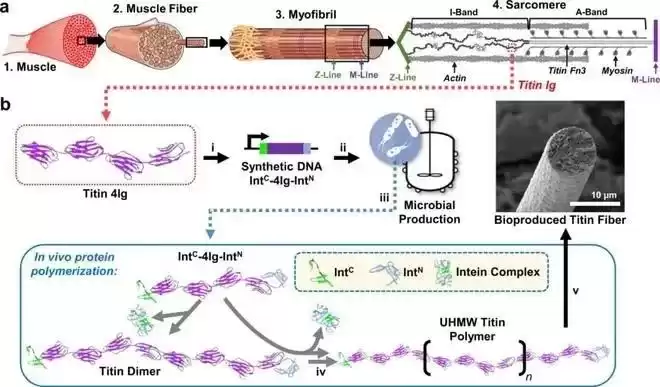
For example, the polymer actin material that cannot be synthesized through chemical methods uses synthetic biology technology to allow cells to synthesize actin monomers. First, the stability of the gene and the throughput of synthesis are ensured, and then a protein is screened. , after modification, it can polymerize monomer molecules in cells to form high-molecular actin materials.
❸Improving enzymatic processes
Traditional fermentation processes usually have problems such as complex manufacturing and storage processes, unstable fermentation products, long production cycles, and product flavor that is often affected by the environment and difficult to control.
Enzyme catalysis technology based on synthetic biology empowers fields such as pharmaceutical chemicals, plant protection products, nutrition and health, diagnostic reagents, and changes production methods. Like the traditional fermentation process, it belongs to the microbial synthesis method. The enzymatic method, also known as the enzyme catalysis method, is a technical method that converts raw materials into products with the help of enzyme protein catalysis. Compared with the traditional fermentation process, the enzymatic method has the advantages of high product yield, high purity, less by-products, and exquisite and simple operation.
❹Alternative fossil resources
Biomass replaces fossil resources to produce fuels and materials necessary for humankind, which can significantly reduce carbon dioxide emissions. Bio-based materials are produced from renewable biological resources such as starch, glucose, and cellulose, which greatly reduces the energy and material consumption of the industrial process, thereby reducing carbon dioxide emissions and demonstrating excellent emission reduction capabilities.
Synthetic biotechnology has gone through three generations of innovation. The first generation mainly used vegetable oil, waste cooking oil, etc. as raw materials to synthesize biofuels; the second generation raw materials developed into non-food biomass, including grain straw, sugarcane bagasse, etc.; the third generation used atmospheric The CO2 in the gas is used as raw material for microbial utilization to produce fuels and chemicals.
At present, the third generation biosynthesis has made initial progress, and examples of successful applications and operations in commercial mode have been produced. In the future, with the development of CO2 fixation and light and electrical energy capture technologies, third-generation biosynthesis is expected to become one of the main ways to reduce carbon dioxide emissions.
◆Advantages of synthetic biology in chemical industry
❶Raw materials are renewable
Synthetic biology usually uses biomass such as sugar, cellulose, and fat as raw materials. The biomass absorbs carbon dioxide from the atmosphere through photosynthesis, and returns it to the atmosphere in the form of carbon dioxide after the final product is consumed, and then re-participates through photosynthesis. In the regeneration and recycling of biomass, a closed-loop cycle of carbon elements is realized, which is of great strategic significance to the sustainable development of mankind.
❷Mild reaction conditions, energy saving and emission reduction
Synthetic biological manufacturing uses enzyme catalysis or cell fermentation to produce products under mild conditions, without the need for precious metal catalysts, high temperature and high pressure and other reaction conditions, thereby reducing the energy consumption required for the reaction. According to statistics from the Tianjin Institute of Industrial Biotechnology, Chinese Academy of Sciences, compared with the petrochemical route, the current average energy saving and emission reduction of biomanufacturing products is 30%-50%, and the future potential will reach 50%-70%.
❸Save costs
Currently, some chemicals produced on a large scale using synthetic biology have reached production costs lower than petroleum-based routes. For example, Escherichia coli modified by synthetic biology is used to produce 1,4-succinic acid through fermentation, which reduces the cost by nearly 20% compared to the petrochemical route.
❹Efficient
Traditional chemical synthesis usually faces the problem of chemical selectivity in the manufacture of complex molecules, such as long routes, low efficiency, and many impurities. However, synthetic biology technology has significant advantages in producing complex molecules. It can be achieved by building high-performance enzymes or designing The metabolic pathway in the chassis cells directly obtains the target product, simplifying the process steps and achieving higher selectivity and efficiency.
◆Conclusion
According to McKinsey statistics, biomanufactured products can cover 70% of chemically manufactured products, and continue to expand the boundaries. The global field of synthetic biology is expected to grow rapidly, and it is estimated that the economic impact of synthetic biology and biomanufacturing will reach US$100 billion by 2025.