
Preheating before welding
The purpose of preheating before welding is to reduce the temperature gradient between the weldment and the weld, delay the cooling rate of the welded joint, and reduce the stress and hardened structure caused by the temperature difference.
For materials prone to cold cracks such as carbon steel, carbon-manganese steel, chromium-molybdenum alloy steel, and low-temperature nickel steel, proper preheating should be performed before welding. When welding steel with a large tendency to hardening, preheating before welding is required; preheating cannot be performed when welding chromium-nickel austenitic stainless steel.
The choice of preheating should be based on comprehensive consideration of steel composition, thickness, structural rigidity, joint form, welding materials, welding methods and environmental factors, and should be determined through weldability experiments.
Heating range: Generally, a uniform heating area should be maintained within the range of 75-100mm on both sides of the groove. The temperature measurement point should be taken at the edge of the hot area. For butt joints, the heating width on each side shall not be less than 5 times the plate thickness.
After hot
Meaning: After welding, the weldment is kept warm and cooled slowly, which can slow down the cooling rate of the weld and heat-affected zone, and play the same role as preheating
1. Hydrogen elimination treatment: heat the weldment to 250-350 ℃ immediately after welding, keep it warm for 2-6 hours, and then air-cool.
2. Purpose: To accelerate the overflow of hydrogen in the weld metal, reduce the hydrogen content in the weld and heat-affected zone, and prevent the generation of cold cracks.
3. Scope of application: If the weldment cannot be heat treated immediately and the weldment must be dehydrogenated in time, it needs to be dehydrogenated immediately.
Post weld heat treatment
There are two main purposes of post-weld heat treatment. One is to further release harmful gases in the weld metal, especially hydrogen, to prevent the occurrence of delayed cracks. The second is to properly slow down the residual stress of welded joints to prevent the occurrence of cold cracks or reheat cracks.
Post-weld heat treatment can relax the welding residual stress, soften the hardened zone, improve the structure and reduce the hydrogen content, thereby reducing the delayed crack tendency of the welded joint.
Heat treatment temperature and holding time are the key parameters of post-weld heat treatment. If the post-weld heat treatment temperature is too high, or the holding time is too long, the crystallization of the weld metal will be coarsened, and carbides will gather, resulting in a decrease in mechanical properties and creep strength.
Common post-weld heat treatment methods
Overall heat treatment: place the weldment in a heating furnace for overall heat treatment, and a satisfactory treatment effect can be obtained. The temperature when the weldment enters and exits the furnace should be below 300 ℃, and the heating and cooling speed below 300 ℃ is related to the thickness of the plate. Should meet the following requirements:

For thick-walled containers, the heating and cooling rate is 50-150°C/h, and the maximum temperature difference in the furnace must not exceed 50°C during the overall treatment. If the weldment is too long and needs to be divided into two treatments, the overlapping heating part should be more than 1.5m.
Partial heat treatment: For simple cylindrical containers and pipe fittings with relatively long dimensions that are inconvenient to be treated as a whole, but relatively regular in shape, partial treatment can be performed. For partial treatment, sufficient heating width should be ensured on both sides of the weld. The heating width of the barrel is related to the radius and wall thickness of the barrel, and can be calculated according to the following formula.
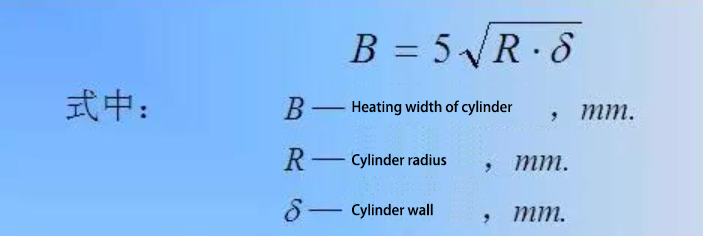
For example, for the local heat treatment of the cylindrical girth weld with a diameter of 1200mm and a wall thickness of 24mm, the 600mm range centered on the weld must be heated to the specified treatment temperature.
Generally, post-weld heat treatment should be considered in the following situations:
1.Ordinary low-alloy steel with a high grade of base metal metal and a tendency to produce delayed cracks.
2.Pressure vessels and other welded structures working at low temperatures, especially those used below the brittle transition temperature.
3.Ordinary low-alloy steel with a high grade of base metal metal and a tendency to produce delayed cracks.
4.Pressure vessels and other welded structures working at low temperatures, especially those used below the brittle transition temperature.
5.Work under alternating loads and require fatigue strength components.
6.Large pressurized vessels.
7.Stress corrosion and welded structures that require stable geometric dimensions after welding.