
In recent years, as people’s requirements for the safety and efficacy of traditional Chinese medicine have increased, traditional Chinese medicine processing has received widespread attention. As one of its basic methods, the traditional Chinese medicine fermentation processing method has become a research hotspot because its principles and technical methods are different from other methods.
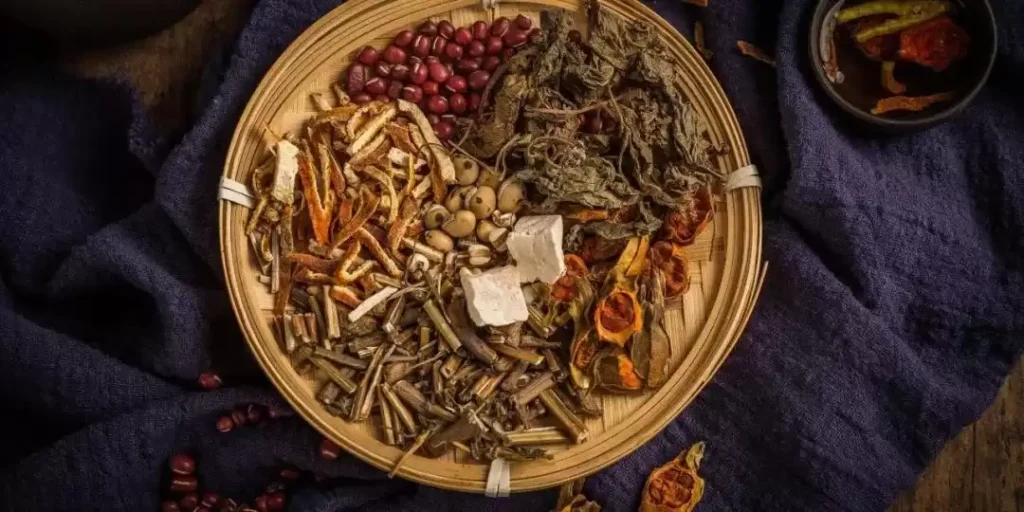
◆Characteristics of Traditional Chinese Medicine Fermentation
The fermentation methods of traditional Chinese medicine can be divided into traditional Chinese medicine fermentation and modern Chinese medicine fermentation according to time.
❶Traditional Chinese medicine fermentation
There are usually two methods for traditional Chinese medicine fermentation. One is a simple mixed fermentation of medicinal materials and flour, such as Agarwood Qu, Liu Shen Qu, Pinellia Pinellia, Jian Shen Qu, etc.; the other is direct fermentation with medicinal materials, such as light tempeh, Baiyaojian etc.
Since there are no more advanced technologies and processes in the fermentation process of traditional Chinese medicines, most of them rely on daily experience and lack a monitoring indicator system, resulting in large differences in drug quality and efficacy. At the same time, there are no advanced detection methods and unified quality standards for traditional Chinese medicine fermentation, and there is also a lack of reference basis for the stability, controllability, safety and effectiveness of fermented Chinese medicine products.
❷Modern Chinese medicine fermentation
With the development of science and technology, advanced traditional Chinese medicine fermentation technology has emerged. It mainly uses probiotics in the fermentation of traditional Chinese medicine to explore the fermentation processing technology and realize the biological transformation of traditional Chinese medicine by microorganisms. Modern Chinese medicine fermentation methods include solid-state fermentation, liquid fermentation and two-way solid-state fermentation.
Solid-state fermentation is a method that uses one or more bacterial strains to ferment by mixing Chinese medicinal materials with other agricultural and sideline products to form a fermentation matrix through five major systems: raw material pretreatment, strains, processes, equipment and downstream engineering.
Liquid fermentation mainly adds traditional Chinese medicine to a culture medium containing mycelium for fermentation under certain temperature conditions. Its advantages are that it has high biological conversion efficiency and can be mechanized and automated, which is conducive to the realization of industrialized large-scale production.
Bidirectional fermentation uses Chinese medicinal materials as the medicinal matrix to replace the traditional fermentation bacteria microbial nutrient matrix. The active and nutritional components in Chinese medicinal materials provide carbon sources, nitrogen sources, trace elements, etc. for microorganisms. During this process, the active substances of microorganisms will also be affected. Chinese medicinal materials change under the influence of each other, and they interact with each other to produce new ingredients and new medicinal effects, so it is called two-way fermentation.
◆Characteristics of Traditional Chinese Medicine Fermentation
•The characteristic of traditional Chinese medicine fermentation technology is that traditional Chinese medicine achieves biological transformation under the action of bred and selected microorganisms, producing new material components and improving its original medicinal efficacy. The specific features are as follows:
•After Chinese medicine is fermented by microorganisms, the active substances and effective ingredients in the medicine can be extracted and utilized to the maximum extent, giving full play to its role in disease prevention and treatment.
•After the traditional Chinese medicine is biotransformed through microbial fermentation, the effective active ingredients that were originally difficult to be absorbed before fermentation are easily absorbed and can quickly exert drug efficacy.
•Microorganisms ferment traditional Chinese medicines to achieve biological transformation. The microorganisms themselves are screened to select strains that are beneficial to the human body. This strain has the effect of enh
•Traditional Chinese medicines produce new drugs after biotransformation through microbial fermentation, with increased active substances, which are more effective and more comprehensive in prevention, treatment or health care.
•The modernization of traditional Chinese medicine is the general trend, because it has high-tech production technology and production technology, with high mechanization and automation. At the same time, the fermentation products obtained are precise and controllable, easy to operate, convenient to prepare, and easy to achieve large-scale production.
◆Application of fermentation of traditional Chinese medicine
Fermented traditional Chinese medicine can greatly promote the development of traditional Chinese medicine pharmaceuticals and expand the application scope of traditional Chinese medicine. It is not only used in the fields of medicines, health products and food, but also in the animal industry, cosmetics industry and traditional Chinese medicine residues.
❶Pharmaceutical field
Fermentation of traditional Chinese medicine is widely used in the field of pharmaceuticals. Fermentation can not only increase the content of active ingredients of traditional Chinese medicine, enhance the efficacy, and synthesize new active substances, but also improve the utilization rate of traditional Chinese medicine, convert the original single medicine into compound medicine, and reduce the cost of traditional Chinese medicine. Cause toxic side effects and improve the taste of traditional Chinese medicine.
❷Health care products and food industry
The current application of traditional Chinese medicine fermentation in the food industry is mainly to improve the dissolution of the active ingredients of traditional Chinese medicine and to improve the bad taste of traditional Chinese medicine. Research on fermentation of traditional Chinese medicines is mostly seen in some health-care Chinese medicinal materials such as ginseng and Ganoderma lucidum that are often used as tonics.
❸Animal feeding
Using fermented Chinese medicine as an animal feed additive in raising healthy animals can improve the animal’s growth performance, immunity, and meat quality.
❹Reuse of traditional Chinese medicine residues
The biomass energy produced after anaerobic fermentation of traditional Chinese medicine residues can be used as an ideal raw material for biogas production. By carrying out anaerobic composting of traditional Chinese medicine residues, biogas and bio-organic fertilizer can be obtained. The matrix obtained after aerobic fermentation of traditional Chinese medicine residue is commonly used as bio-organic fertilizer, livestock feed or feed additive, microbial flocculant, etc.
◆Conclusion
Under the influence of modern fermentation technology, the application fields of traditional Chinese medicine have been broadened, which has played an important role in promoting the inheritance and development of traditional Chinese medicine in my country.