
Cell culture refers to a method that simulates the physiological environment of cells (sterility, suitable temperature, pH and certain nutritional conditions, etc.) to enable cells to survive, grow, reproduce and maintain their main structures and functions. Common cell culture methods include adherent culture, suspension culture, immobilized culture, batch culture, fed-batch culture, continuous culture and perfusion culture.
◆Adherent culture
Adherent culture uses culture dishes and roller bottles as culture carriers, and cells are cultured by adhering to a certain fixed surface. It is mainly suitable for anchorage-dependent cells. Once these cells adhere to the wall, they spread rapidly, start mitosis, and enter the long-term logarithmic growth phase.
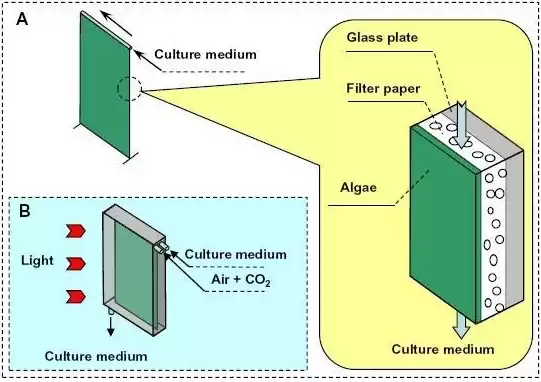
•Advantage:
❶Cells immobilized on surface, no filtration system required
❷The same equipment can use different culture medium/cell ratios
❸Suitable for all cell types It is easy to replace the culture medium.
❹The cells are close to the fixed surface.
❺The old culture medium can be poured out directly and new culture medium can be added directly after cleaning.
•Disadvantages: (compared to suspension culture)
❶Covers a large area
❷Inability to effectively detect cell growth
❸Expanding training is difficult and requires large investment
❹Cells grow as a monolayer attached to the matrix, and contact inhibition occurs when the matrix is covered.
◆Suspension culture
Suspension culture refers to a tissue culture system that cultivates single cells and small cell clusters in a liquid medium that is constantly stirred or shaken. It is a culture method for non-adhesion-dependent cells.
•Advantage:
No support surface required, ideal for large-scale cell culture
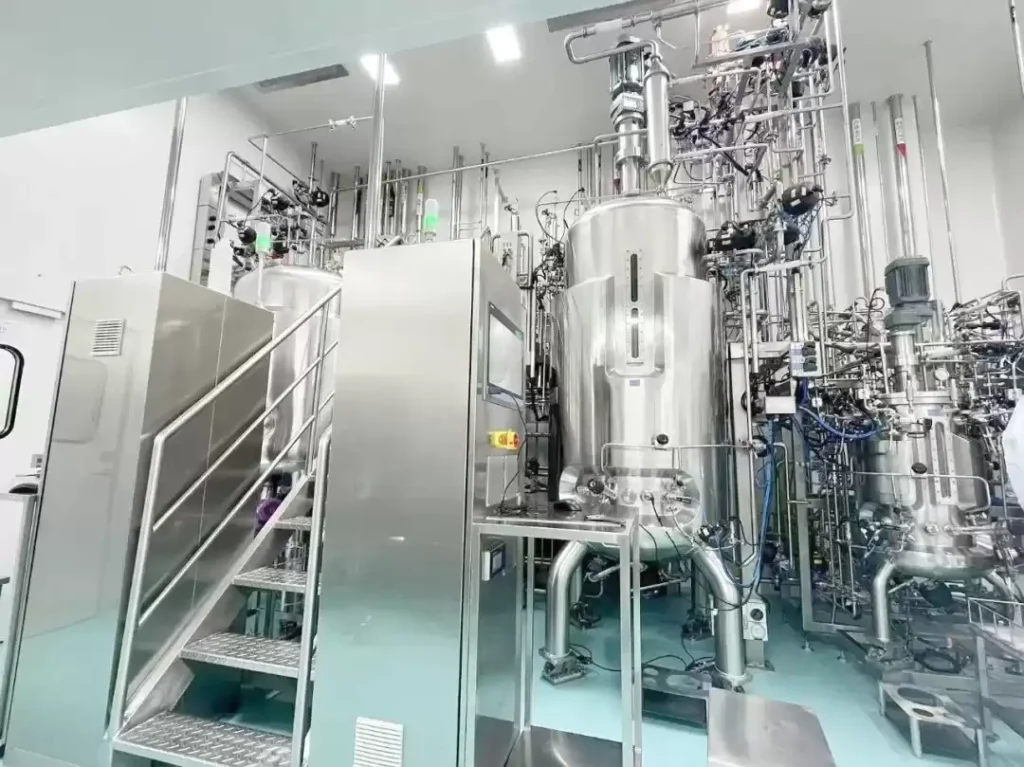
Continuous culture is a common suspension culture mode that uses a mechanically stirred bioreactor system. This mode is to inoculate cells with a certain volume of culture medium. In order to prevent the occurrence of a decline period, fresh culture medium is continuously added to the bioreactor at a certain speed before the cells reach the maximum density. At the same time, the culture containing cells is maintained at the same rate. flow out of the reactor continuously to keep the culture volume constant.
•Advantage:
❶Cells maintain sustained exponential growth
❷Product volume continues to grow
❸Controllable recession and decline periods
❹Can effectively extend the logarithmic growth phase in batch culture
❺The utilization efficiency of nutrients is improved and the accumulation of harmful products is reduced.
❻The culture state of the reactor can reach a constant state, and the cells grow in a steady state
◆Immobilized culture
Immobilized culture is a fermentation culture in which living bacterial cells are fixed on a solid support medium. It is a method that combines the characteristics of solid culture and liquid deep culture.
Due to the different cells being cultured, the methods of immobilization and culture are also different. Generally, collagen embedding is used for anchorage-dependent cells, while calcium alginate embedding is commonly used for anchorage-independent cells. Commonly used cell immobilization methods include adsorption, covalent attachment, ionic/covalent cross-linking, encapsulation, and microencapsulation.
•Advantage:
❶Immobilized growth
❷Suitable for both anchorage-dependent and -independent cells
❸It can better protect cells from mechanical forces and environmental changes and improve cell tolerance.
❹Promote high-density cell culture and increase the yield of target products
◆Batch culture
Batch culture uses a mechanically stirred bioreactor. After the cells are expanded and cultured, they are transferred into the bioreactor for culture at one time. During the culture process, their volume remains unchanged and no other ingredients are added. After the cells grow and the products are formed and accumulated, At the appropriate time, cells, products, and culture media are harvested at once.
During the batch culture process, the growth of cells is divided into five stages: lag phase, logarithmic growth phase, deceleration phase, stationary phase and decline phase. The culture cycle is usually 3 to 5 days. The cells first go through the logarithmic growth phase (48 to 72 hours) and then reach the highest cell density. They then enter the decline phase and die due to the depletion of nutrients or the accumulation of metabolic toxic by-products. The product is usually harvested just before or after the cells have died.
•Features:
❶Intuitively reflect cell growth and metabolic processes
❷No materials are added during the culture process, and the risk of bacterial contamination and cell mutation is small.
❸It can be directly amplified, the culture process is simple, the requirements for equipment and control are low, and the equipment is highly versatile.
•Shortcoming:
Short culture period and low yield
◆Fed-batch culture
Fed-batch culture is based on batch culture, using a mechanically stirred bioreactor system, suspension culture cells or suspended microcarriers to culture adherent cells. The volume of culture medium for initial inoculation of cells is generally 1/2 of the final volume. ~1/3, during the culture process, concentrated nutrients or culture media are added according to the cells’ continuous consumption and demand for nutrients, so that the cells continue to grow to a higher density and the target product reaches a higher level.
Key technologies: basic culture medium and fed-batch concentrated nutrient culture medium.
Nutrients: including glucose, glutamine, amino acids, vitamins and others.
Feeding time: Mostly in the late exponential growth phase, before the cells enter the decline phase, high concentrations of nutrients are added.
The general principle: Maintain a relatively stable culture environment for cell growth. The nutrients should not be excessive and produce a large amount of metabolic by-products, causing the nutrient utilization efficiency to decrease and become ineffective use; nor should the lack of nutrients lead to cell growth inhibition or death.
•Advantage:
❶According to the growth rate, nutrient consumption, and metabolite inhibition, the feeding medium is fed and the culture environment is suitable.
❷The culture process is fed with a low dilution rate, resulting in longer cell residence time, higher total cell density, and higher product concentration.
❸In industrial production, the amplification principle and process control of suspended fed-batch culture process parameters are easier to understand and master than other culture systems. Direct amplification of process parameters can be used
•Shortcoming:
❶Risk of hyperosmotic pressure
❷The addition of high-concentration glucose may induce the Crabtree effect, and cell growth and yield are prematurely inhibited.
❸The accumulation of toxic metabolites and the residence time of antibodies in the fermentation broth may affect the quality of the antibodies.
◆Perfusion culture
Perfusion culture is to add cells and culture medium to the reactor together. During the process of cell growth and product formation, part of the conditioned medium is continuously taken out and new culture medium is continuously perfused. When part of the conditioned medium is removed, most of the cells remain in the reactor.
There are two main forms of bioreactors commonly used in perfusion culture. One is a stirred bioreactor for suspension culture of cells, and the other is a fixed bed or fluidized bed bioreactor.
•Advantage:
❶The reaction rate is easy to control, the culture cycle is long, productivity can be improved, and the target product recovery rate is high
❷The product stays in the tank for a short time and can be recovered in time and stored at low temperature, which is beneficial to maintaining the activity of the product.
❸The cell interception system can keep cells or enzymes in the reactor and maintain a high cell density, generally up to 107-109/mL, thereby greatly increasing product yield.
❹The continuous perfusion system keeps cells in a stable nutritional environment and reduces the accumulation of harmful metabolic wastes.
•Shortcoming:
It is easy to be infected with bacteria, has many process control points, and is difficult to operate.
Conclusion
In the biological fermentation production process, the choice of cell culture method generally needs to be considered in conjunction with multiple factors to ensure that a high-quality target stock solution is finally obtained.