
Air-lift fermentor is one of the most important equipment in the bioprocessing industry. It is used to carry out the production of an array of products on the industrial scale. Bioprocessing falls under a branch of biotechnology that uses a biological organism, including the bacteria, fungi, or yeast, to produce a long list of molecules and chemicals, such as enzymes, antibiotics, and bioplastics. What is interesting about bioprocessing is that the biological systems tend to self-replicate and regulate themselves, leading to a far more efficient, sustainable, and clean process compared with the traditional chemical way. Among the key technologies which made industrial-scale bioprocessing possible is the air-lift fermentor.
The Future of Bioprocessing?
The bioprocessing industry is rapidly growing with the ever-increasing demand for sustainable and environmentally friendly products. Bioprocessing has the potential to replace many traditional chemical processes that are highly polluting and energy-intensive. In this respect, it becomes an essential part of the transition toward a circular economy. Among the key technologies expected to be central to the future of bioprocessing, air-lift fermentor offers a range of advantages over other fermentation systems.
Which is better? There are several different types of fermentors applied in the bioprocessing industry, including batch, fed-batch, and continuous fermentors. Different applications have their own strengths and weaknesses. However, by and large, air-lift fermentors are superior compared to other fermentor types. Some of the benefits of air-lift fermentors include better oxygen transfer, lower shear forces on the cells, and easier scale-up. The advantages of the use of an air-lift fermentor also encompass a broad application spectrum. It includes aerobic to anaerobic fermentation and extends from microbial to animal cell culture.
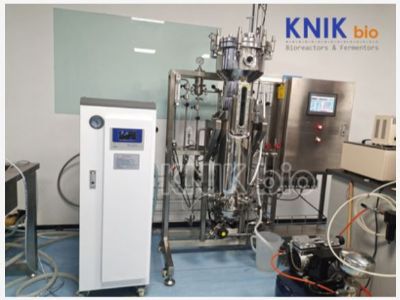
How Does an Air-Lift Fermentor Work? A Step-by-Step Explanation?
Air-lift fermentors are a kind of bioreactor wherein air is primarily used as the mode of agitation. The basic design of an air-lift fermentor is a column with two zones, the riser and the downcomer, connected by a gas distributor at the bottom of the column. In the riser zone, air is injected into the column, creating bubbles that rise to the top and create a circulation of liquid.
An air-lift fermentor can either be operated in batch mode or continuous mode. With batch mode, the column contains liquid that is added once and fermentation continues until product formation. In continuous operation, liquid is fed in continuously, and the formed product is removed continuously in a continuous process.
Conclusion
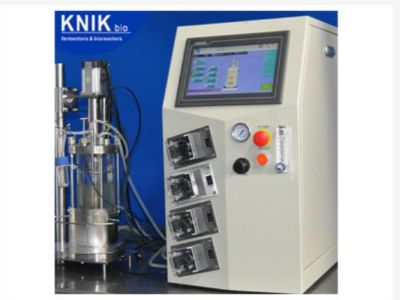
In order to get the best from an air lift fermentor, several tricks and tips can be carried out. For example, the air flow rate and liquid circulation rate should be fine-tuned to maximize oxygen transfer rate. The pH and temperature should also remain within the optimal range to suit the organism used in the process.
The air-lift fermentor is one unique type among other fermentors, possessing the following:. The growth and development of the bioprocessing industry are likely to make the air lift fermentors an increasingly important tool in the production of sustainable and environmentally friendly products.