
With the rapid development of the antibody drug field, the animal cell culture process is also constantly updated and optimized, and the culture scale is even expanded from the early hundred-liter level to the ten-thousand-liter level.
If the production process of antibody drugs is calculated from the beginning of cell recovery, the cell continuous culture and expansion stage occupies most of the time of the whole process.
Therefore, the superiority of cell culture process is one of the most critical factors in antibody production.
Antibody drugs are developed through the QbD approach for the upstream process of production, which utilizes the design of experiments
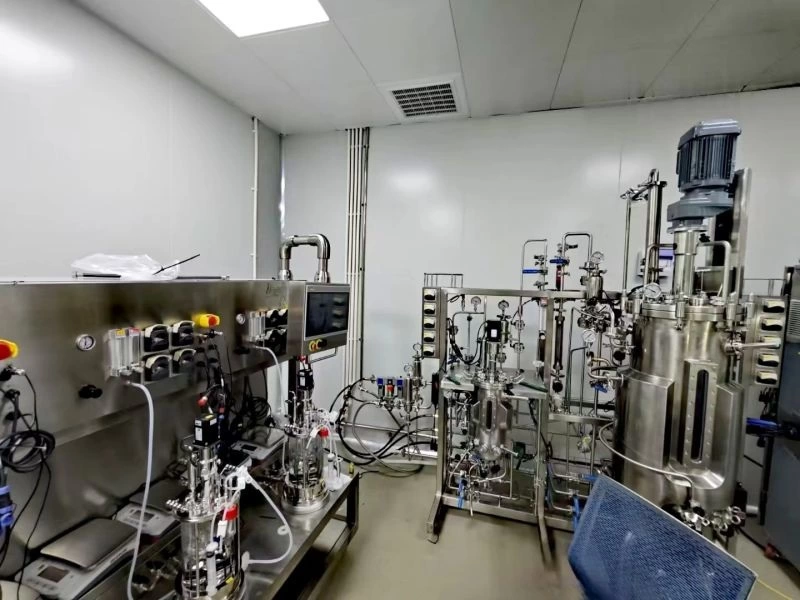
Antibody drugs are developed through a QbD approach for the production of upstream processes, utilizing the advantages of design of experiments (DoE) and high-throughput parallel bioreactors and other technologies and equipment to efficiently complete the antibody laboratory-scale R&D process, to gain an early understanding of the relationship between critical product quality attributes (CAQs) and critical process parameters (CPPs), as well as to determine the design space in the R&D process ( Design Space)
Once these small-scale R&D processes have been completed, the next step is process scale-up. Ideally, efficient process scale-up can complete the transition from R&D scale to pilot/production scale within 2-4 months. How to realize efficient process transfer and scale-up is a serious test of the experience and level of the entire process technology team.
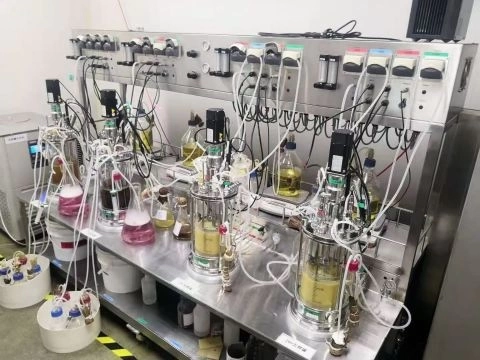
The goal of process scale-up is to ensure stable cell growth for product expression in a relatively constant environment as the cell culture is gradually scaled up.
Measurements include various aspects such as cell density, growth rate, viability, product expression rate and glycosylation level. Critical control parameters during the scale-up of a cell culture process will fall into two types.
One type is volume independent, such as temperature, DO and pH. The other is volume- and geometry-dependent, such as stirring speed and aeration flow rate.
Due to the variety of tank suppliers used in the R&D phase, the tank materials (disposable or glass), height-to-diameter ratios, stirring paddle diameters and tank diameter ratios, as well as the tanks used in the scaled-up tanks are generally not exactly the same; even tanks from the same supplier with different volumes cannot be scaled up to the same proportional dimensions. This brings great challenges to the determination of parameters such as stirring and aeration after enlargement.
To maintain consistency in the incubation environment, developers typically use several amplification guidelines.
1. Constant blade end speed (Tip Speed)
Stirring paddle shear is one of the important factors to be considered in the cell culture process. Different engineered cell lines have different tolerance to shear force. Early CHO cells tolerated low shear forces, and the tolerance to shear forces has been greatly improved in the current stage of engineered cell lines.
Shear tends to be characterized by the speed of the blade end. The mixing paddle diameter and rotational speed determine the magnitude of the blade-end velocity. Due to the tank design, the stirring paddle diameter increases as the tank volume increases. Therefore the constant blade end speed model has a lower mixing speed for larger tank volumes than for smaller volumes. Constant lobe-end speed amplification allows cells to grow in the same shear environment. This amplification strategy is suitable for small scale amplification and production.
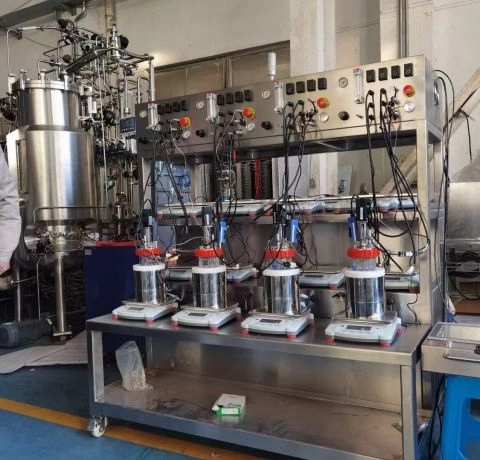
2. Constant mixing time
The mixing time is a simple amplification criterion. Especially in the chemical industry, a constant mixing time can be used as a direct basis for scale-up. However, in cell culture processes, small volumes (e.g. up to 2L) can reach the mixing time very quickly, whereas larger volumes require higher leaf-end speeds to reach the mixing time. This leads to increased shear forces and cell damage.
3. Constant KLa
KLa characterizes the rate at which oxygen enters from the gas phase to the liquid phase. The proper KLa in the reactor is the key to process scale-up; O2 acts as an important nutrient for cells and affects normal cell growth and metabolism. The constant KLa amplification criterion gives the cells the same environment for oxygen delivery.
However, the determination of KLa is affected by many factors. For example, stirring speed during the culture process, aeration flow rate, etc. Many tests and analyses are needed to determine the appropriate KLa. In practice, KLa increases with the working volume. When a certain volume is reached, KLa CO2 will again interact with KLa, increasing the difficulty of constant KLa amplification.
4. Constant unit volume power consumption ratio (P/V)
P/V is related to many factors such as stirring power (Np, Power Number), tank diameter, stirring paddle diameter, working volume, liquid density, etc., which to some extent reflects the degree of mixing and affects the mixing and mass transfer of the culture system. Therefore constant P/V is recommended as a guideline for many process scale-ups and is the most commonly used current scale-up strategy. Considering the different tolerance of cell shear, the common P/V ranges from 10-40 W/m3.
Many Factors Affecting P/V Values
In addition to the above 4 bases for amplification, the negative impact of pCO2 on cell growth and protein expression also needs to be considered when scaling up to a certain volume. In small-volume culture, there is basically no need to consider CO2 removal (CO2 Stripping) because the gas passed in can take away most of the CO2 produced by cell metabolism during the rising process.
In contrast, in large-volume culture, kLa CO2 decreases with the expansion of the reactor size, i.e., the CO2 removal capacity decreases. Gas saturation and bubble volume in the system directly affect CO2 removal, and increasing aeration and bubble residence time can accelerate removal. Some reactor suppliers integrate CO2 removal into the control system to facilitate control of pCO2.
Antibody process technology continues to improve, and the challenges of process scale-up continue to evolve. Often times, process developers are required to flexibly adjust the scale-up process according to the different characteristics of the cell line and the different products expressed. More often than not, P/V, leaf-end speed, CO2 removal and other factors are taken into consideration to get the best amplification production process while ensuring CQAs.