
Fermentation contamination can bring serious harm to production. Preventing bacterial contamination is an important task for any fermentation factory. Especially for liquid submerged fermentation that requires high sterility, the importance of pollution prevention and control is even more prominent.
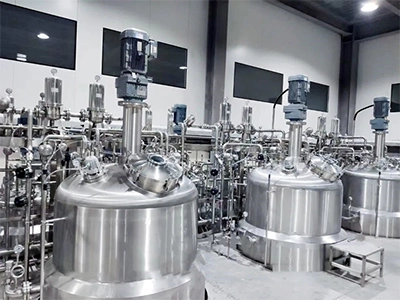
◆Equipment preparation before fermenter sterilization
Ⅰ. The preparation of empty cans before disinfection mainly includes three aspects:
❶Inspection of equipment inside and outside the tank
•Check whether the transmission equipment in the tank, such as the mixing shaft, mixing blades, bottom tiles, and tie rods, are firm, worn, and rotate abnormally.
•Are there any holes, blockages, or breaks in the pipelines inside the tank? This includes tightness inspection of sandwich or serpentine tubes
•Check the equipment and pipelines outside the tank for leaks and blockages, and replace gaskets on valves
❷ Removal of dead corners in tanks such as tank walls, tank bottoms, pallets, and accumulations behind baffles
❸Rigorous inspection of tank welds, valves, flanges, and tees to prevent leaks
Ⅱ . Leak test of equipment tightness before sterilization
What scope should the equipment tightness leak test include?
❶Tank: including shaft seal, inlet and outlet valves, transplanting and feeding valves, jacket water inlet and cold water return valves, air inlet valves, oil, sugar, acid, fluorine material valves, sampling and erosion mirror valves, and The small exhaust valve to which each valve belongs.
❷Air filter, flange interface pad, pressure gauge wire port, etc.
❸Oil and sugar tank (feeding tank): including air inlet valve, steam valve, discharge valve, and various small steam exhaust valves
❹The distribution station valves and small steam exhaust valves of each system pipeline connected to the single tank
The valve seats, valve cores and flat packings of the above-mentioned types of valves, as well as the thread openings and welded joints of pipe fittings and valves, should be rigorously tested for leaks.
◆Precautions for sterilization of empty fermentation tanks
❶Drain the contents of the tank
Before sterilizing the fermentation tank, the contents of the tank must first be completely removed. This includes fermentation broth, strains, residues, etc. If these substances remain in the tank, subsequent sterilization may not be complete and the hygienic condition inside the tank cannot be guaranteed. Therefore, the contents of the tank must be carefully drained before sterilization.
❷Choose the appropriate sterilization temperature and time
Fermentation tanks are generally sterilized using high temperature and high pressure methods. Generally speaking, the higher the sterilization temperature and time, the more likely it is to kill bacteria and viruses in the tank, thereby ensuring the hygienic condition of the fermentation tank. However, excessive temperature and time may also cause damage to the fermentation tank, so appropriate sterilization temperature and time need to be adopted according to the actual situation.
❸Pay attention to sterilization methods
There are many methods for sterilizing fermentation tanks. Common ones include high-pressure steam sterilization, dry heat sterilization, ozone sterilization, etc. Different sterilization methods have different effects on the contents of the tank, and a suitable sterilization method needs to be selected according to the actual situation. At the same time, when performing sterilization, you must carefully abide by the operating procedures and pay attention to safety matters to ensure that no safety accidents and material waste are caused.
❹Regular cleaning and inspection
During the fermentation process, substances are easy to remain in the tank, which affects the hygienic condition. Therefore, regular cleaning and inspection are required. When cleaning, special cleaning agents and cleaning tools need to be used to ensure that there are no residues in the tank. During inspection, it is necessary to check the sealing and normal operation of the fermentation tank. This ensures that the fermentation tank is always in good sanitary condition.
In summary, there are many things that need to be paid attention to when sterilizing empty fermentation tanks, including draining the contents of the tank, selecting appropriate sterilization temperature and time, paying attention to sterilization methods, and regular cleaning and inspection. Only by carefully complying with the operating procedures can the hygienic condition of the fermentation tank be ensured and the fermentation process be more stable and reliable.
A way to replace the sterilization of high-temperature and high-pressure fermentation tanks. A new method of normal temperature fermentation and sterilization. Highly efficient and low-cost.
Knic controls important aspects of fermentation production, eliminates the risk of microorganisms exceeding standards, and provides fermentation air system sterilization solutions. Based on the world’s leading environmentally friendly disinfectant and digital intelligent disinfection system, the implementation ensures that microorganisms in fermentation production meet the standards. The new normal temperature non-high temperature and high pressure fermentation tank sterilization technology is efficient, environmentally friendly and low-cost to solve the problem of bacterial contamination during the fermentation process.
Knic Life Sciences has been focusing on fermentation production for decades, is familiar with comprehensive solutions to fermentation pollution, has rich practical experience in front-line operations, and can completely solve the problem of contaminating phages and miscellaneous bacteria in fermentation production. Runlian Life Sciences’ new room-temperature fermentation sterilization method is based on an imported inhibitory liquid, which ensures the sterility of the fermentation process, helps prevent microbial contamination, and ensures the safety and reliability of fermented products.
The new room-temperature fermentation sterilization solution has the following characteristics:
❶Thoroughly and efficiently remove and prevent bacterial contamination in fermentation tanks
❷It is highly efficient, environmentally friendly, safe and personnel-friendly, and can quickly kill bacteria and Bacillus;
❸Normal temperature sterilization technology, not high temperature and high pressure;
❹It is normal temperature and safe, so it does not change the quality, taste and color of the product itself;
❺Significantly improve fermentation success rate;
❻Efficient, fast and low-cost sterilization to increase the amount of fermentation products.