
Selection of Spray Balls and Their Relationship with Flow Rate**
The selection of spray balls (also known as spray nozzles or cleaning balls) is closely related to flow rate, which is a key parameter determining their performance and suitability for specific applications.
Below is a detailed analysis of how flow rate influences spray ball selection.
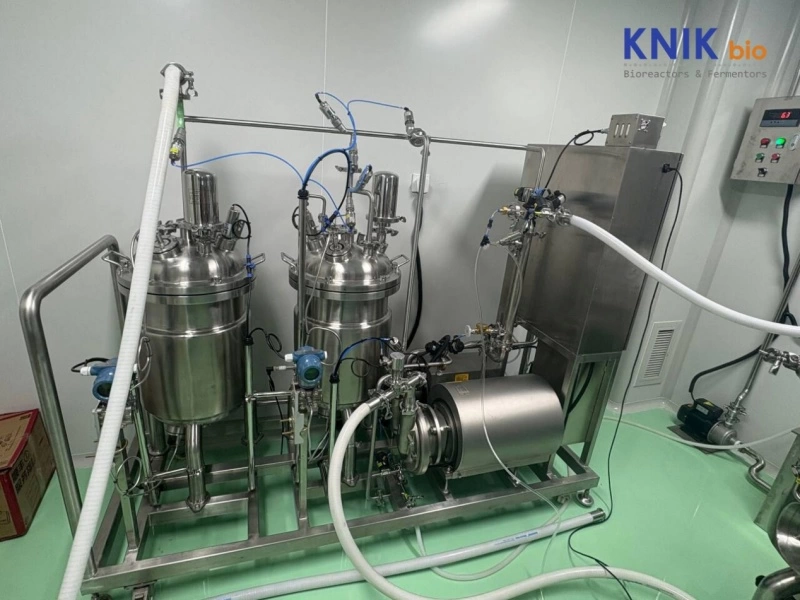
Impact of Flow Rate on Spray Ball Selection
– **Coverage Area**:
Higher flow rates generally result in wider spray coverage (depending on design pressure). However, excessive flow may lead to larger droplets or reduced atomization.
– **Cleaning Efficiency**:
The flow rate must provide sufficient impact force (e.g., CIP cleaning typically requires a pipeline flow velocity ≥1.5 m/s) while avoiding unnecessary waste.
– **System Compatibility**:
The spray ball’s flow rate must match the pump’s capacity and pipeline pressure to prevent insufficient flow or system overload.
Key Parameters and Their Relationships
– **Flow Rate vs. Pressure**:
The flow rate (Q) of a spray ball is positively correlated with inlet pressure (P), typically following the formula:
( Q = K cdot sqrt{P} )
(where ( K ) is the flow coefficient determined by nozzle aperture and quantity).
– **Nozzle Aperture**:
Flow rate is proportional to the total cross-sectional area of the nozzles. Larger apertures or more nozzles require higher flow rates.
– **Spray Pattern**:
Rotating spray balls usually require higher flow rates than fixed types to maintain rotational momentum.
Steps for Selecting Spray Ball Flow Rate
1. **Determine Process Requirements**:
– Cleaning standards (e.g., FDA/GMP coverage requirements in pharmaceuticals).
– Medium type (water, acid, alkali, etc., affecting viscosity and flow calculations).
2. **Calculate Required Flow Rate**:
– Estimate total flow based on tank volume and cleaning time (e.g., 5-10 minutes for full coverage).
– Example: For a 1 m³ tank with a 5-minute wash cycle, minimum flow rate ( Q = 1, ext{m}³ / 5, ext{min} = 200, ext{L/min} ).
3. **Verify System Capacity**:
– Check pump specifications and pipeline pressure loss to ensure optimal spray ball operation (typically 0.2-0.6 MPa).
4. **Validate Coverage**:
– Use flow-pressure curves to confirm spray radius and overlap (usually requiring 100% coverage).
Typical Flow Rate References for Common Applications
| **Application** | **Spray Ball Type** | **Typical Flow Range** | **Pressure Range** |
|—————————|————————-|————————|———————-|
| Small Tank CIP Cleaning | Fixed Spray Ball | 10-50 L/min | 0.2-0.4 MPa |
| Large Fermentation Tank | Rotating Spray Ball | 200-1000 L/min | 0.3-0.6 MPa |
| Food Filling Line Rinsing | Wide-Angle Spray Ball | 30-100 L/min | 0.1-0.3 MPa |
Key Considerations
– **Clogging Prevention**: High flow rates require larger apertures or self-cleaning designs (e.g., rotating spray balls).
– **Material Corrosion Resistance**: Higher flow rates increase erosion risks—choose durable materials (e.g., 316L stainless steel, PTFE).
– **Energy Efficiency**: Opt for adjustable-flow spray balls or variable-frequency pumps to minimize waste.
Conclusion
Selecting the right spray ball flow rate requires balancing process needs, system capabilities, and cleaning validation. Collaboration with suppliers and real-world testing (or CFD simulation) is recommended to ensure optimal coverage, pressure, and spray pattern synergy.