
Bioreactor is a kind of equipment widely used in the fields of life science and engineering. It can be used to develop and produce various biological products. With the continuous development of biotechnology, the scale and automation of bioreactors have also continued to increase. In this article, we will discuss related technologies for scaling up and automating control of bioreactors.
◆The need for bioreactor scale-up
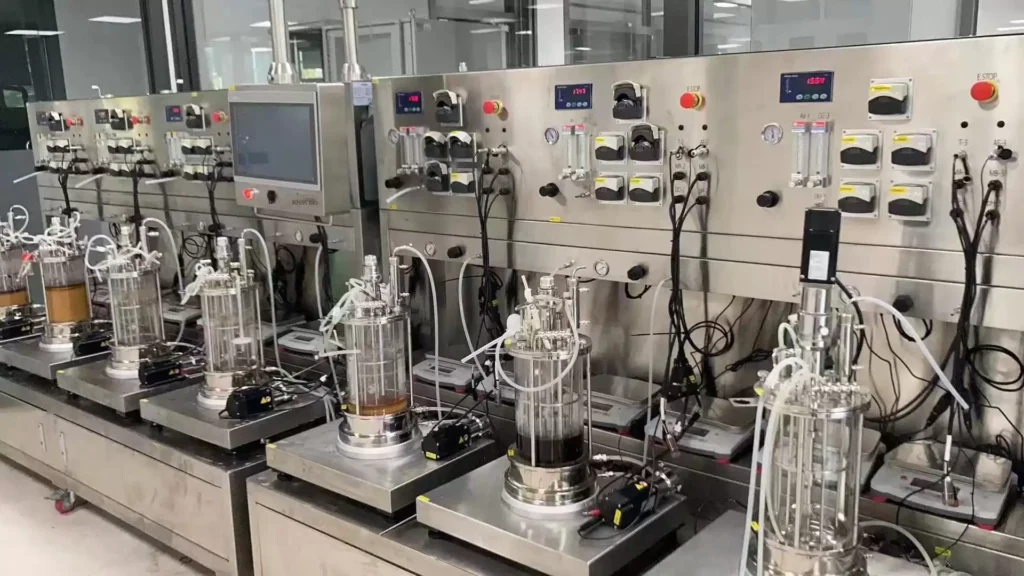
The demand for bioreactor scale expansion mainly comes from the following two aspects:
❶Production requirements
As the demand for various biological products increases, such as vaccines, antibodies, growth factors, etc., manufacturers need larger and more efficient bioreactors to increase production and improve product quality.
❷Research needs
Some large-scale research projects require large-scale bioreactors to conduct experiments; at the same time, complex cell cultures in some basic research also require larger reactors to increase production and reduce costs.
◆Challenges of Bioreactor Scaling
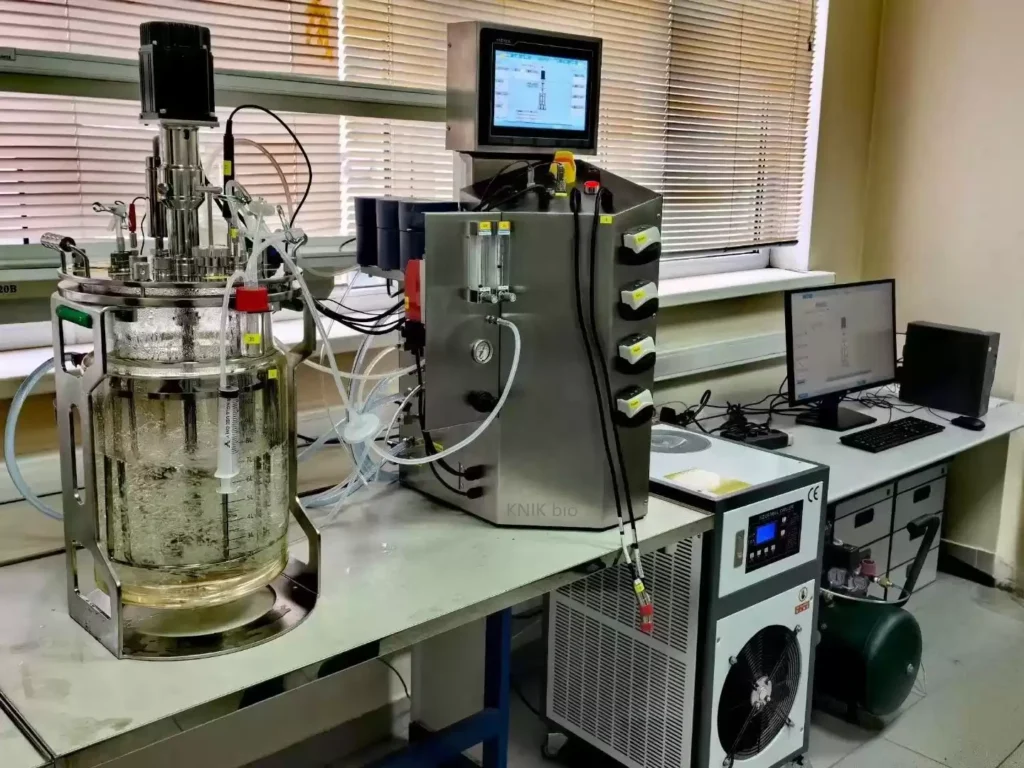
When the scale of the bioreactor is expanded to a certain level, it will face the following challenges:
❶Oxygen and nutrient transport issues
After the bioreactor is expanded, the depth of the liquid level increases, and the transfer rate of oxygen and nutrients will decrease, resulting in insufficient oxygen and nutrients inside the bioreactor.
❷Control issues
Large-scale reactors require a higher level of control and monitoring, and process control is challenging.
❸Poor mixing effect
After the reactor is expanded, the stirring speed will slow down and the mixing effect will become worse, affecting the uniformity of material mixing inside the reactor.
Therefore, for the scale expansion of bioreactors, corresponding improvements and optimizations need to be made on the above challenges.
◆Solutions for bioreactor scale-up
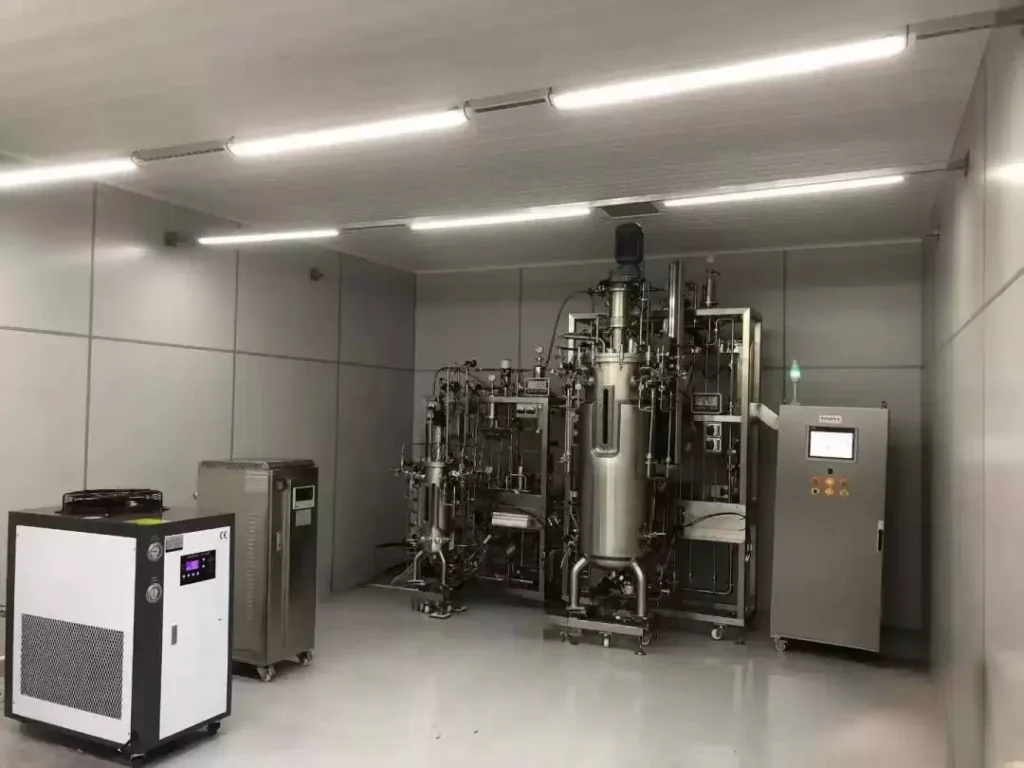
Solutions for bioreactor scale expansion mainly include the following aspects:
❶Design Optimization
By optimizing the design of the reactor, such as changing the shape of the reactor, changing the liquid level depth, etc., the oxygen and nutrient transfer performance in the reactor can be improved.
❷Determine optimal production conditions
Determine the optimal production conditions, such as temperature, stirring speed, air intake, etc. At the same time, advanced measurement and control technology is used to realize automated control of the reaction process.
❸Improve mixing performance
The use of efficient mixers or agitators, such as propellers, scrapers, bubbles, etc., can improve the uniformity of material mixing inside the reactor.
❹Using advanced fermentation technology
The use of advanced fermentation technologies, such as batch production, gradual dropwise addition of nutrients, control of air intake speed, etc., can avoid problems caused by bioreactor expansion and ensure production efficiency and quality.
◆Application of automated control in bioreactor production
With the continuous development of science and technology, automated control is becoming more and more important in the production of bioreactors. Automated control can effectively improve the production process, increase production efficiency and product quality. Automated control of bioreactors usually includes the following aspects:
❶Measurement control system
By installing sensors and measuring instruments in the reactor, various parameters in the reactor, such as temperature, pressure, pH value, dissolved oxygen, etc., can be measured in order to monitor and control the production process in real time.
❷Control algorithm
Control algorithms are the key to the automated control process of bioreactors. Commonly used control algorithms include PID control, model predictive control, etc., which are used to control parameters such as flow rate and stirring intensity in the reactor.
❸Machine learning algorithm
In recent years, machine learning algorithms have been widely used in the automated control of bioreactors. It is mainly through training
Bioreactor scale-up and automated control have become important issues in the fields of modern life sciences and engineering. By improving the design of the reactor, optimizing the production process, improving mixing performance, and improving control algorithms, the challenges of reactor scale expansion can be effectively solved and production efficiency and product quality improved. At the same time, the introduction of machine learning technology can bring new ideas and possibilities to reactor automation control and further promote the development of bioreactor technology.