
〖BIOREACTOR DESIGN AND PERFORMANCE STUDIES〗
Bioreactor is a very important biochemical process equipment, widely used in biotechnology, pharmaceutical industry, food industry, environmental protection and other fields. The design and performance study of bioreactors are very important and can determine their production efficiency and product quality. The purpose of this article is to provide an introduction to bioreactor design and performance studies.
◆Bioreactor design
The design of a bioreactor is a complex process that requires consideration of many factors, such as the material, shape, size, inlet and outlet location of the reaction vessel, stirring method, perfusion method, ventilation method, etc. The selection of these factors directly affects the biological reaction process and its effects in the reactor.
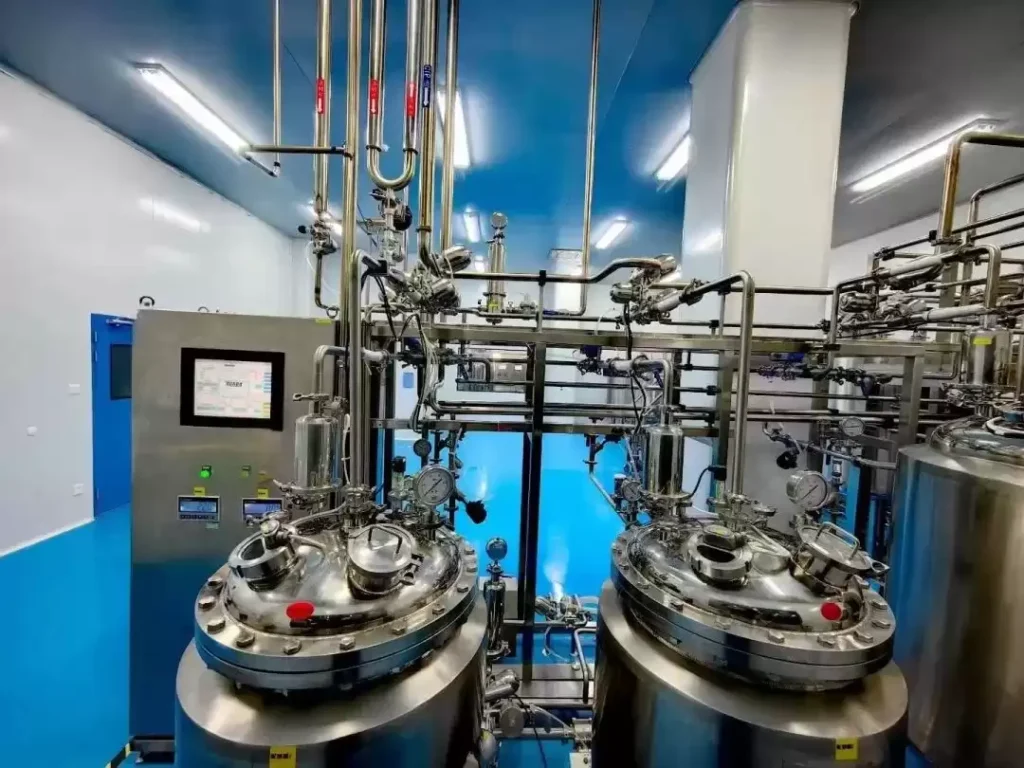
❶Reaction vessel selection
The choice of reaction vessel is very important. Generally speaking, the material should have good chemical stability, high temperature tolerance, pressure tolerance and physical and mechanical properties. For example, glass reactors are suitable for processing low temperature, low pressure and small reactors; stainless steel reactors are suitable for processing medium temperature, high pressure and large reactors.
❷Reaction vessel shape
The shape of the reaction vessel also affects the hydrodynamic properties within the reactor, thereby affecting the speed and efficiency of the reaction. Generally speaking, cylindrical and spherical reaction vessels have less impact on fluid flow and are more suitable for suspension culture; while flat and elongated reaction vessels perform better in mass transfer and mixing and are suitable for liquid culture.
❸Reaction vessel size
The volume of the reactor directly affects the production capacity of the reactor. When selecting the reactor size, factors such as production needs, biological species and properties, inhibitory effects of reactants and products, etc. need to be considered to determine a reasonable reactor volume.
❹Selection of import and export locations
The inlet and outlet locations of reactants and products determine the operation mode and degree of automation of the reactor. Therefore, the convenience and practicality of the production operation process and on-site equipment automation control should be considered at the entrance and exit locations.
❺Stirring method
The stirring method also has a great influence on the biological reactions in the reactor. Different species of organisms require different types of agitation; some strains require vigorous agitation, while others are fine with light agitation. The choice of stirring method should be based on the maximum rotation speed, stirring power and related physical parameters required by the bioreactor.
❻Perfusion and ventilation methods
Perfusion and ventilation methods are also important design parameters. The selection of these parameters can meet the needs of reactants and products, improve mixing, improve mixing quality, and prevent vortex and unevenness in the reactor.
◆Bioreactor performance studies
The study of bioreactor performance is an important part of bioreactor design. Its purpose is to optimize the operating efficiency and reaction yield of the reactor and improve production effects and economic benefits.
❶Monitoring of reactor environment
The environment inside the reactor has a critical impact on the effectiveness of biological reactions. Therefore, it is necessary to monitor environmental changes in the reactor, including parameters such as temperature, pH value, oxygen content, stirring speed, liquid level, etc., to achieve dynamic adjustment and optimization of reaction process parameters.
❷Biological species selection and optimization
Biological species selection is one of the key links in bioreactor performance research. Different biological species have different reaction characteristics and growth conditions. For specific application purposes and reactor design requirements, it is necessary to screen and optimize biological species to maximize reaction yield and rate, thereby maximizing production efficiency.
❸Fluid mechanics study of reactor
The study of fluid mechanics in reactors has an important impact on the mixing effect of biological reactions in the reactor, gas-liquid mass transfer efficiency, and vortex flow in the reactor. Therefore, in reactor design, it is necessary to conduct comprehensive research and analysis on the fluid mechanics properties of different reactor types, and adjust the fluid field and material transfer conditions in the reactor to improve the reaction performance such as mixing effect and mass transfer efficiency in the reactor.
❹Biochemical reaction kinetics study
The study of biological reaction kinetics in the reactor refers to the study of the dynamic process of substance transformation, proliferation and death during the reaction process. By establishing the reaction kinetic model of each biological component and determining its metabolic capacity and formation rate, the reactor operating parameters can be optimized to achieve production optimization.
Bioreactor is a very important biochemical technology equipment and is widely used in many fields. Bioreactor design and performance research are key factors in improving reactor production efficiency and product quality. Factors such as the material, shape, size, inlet and outlet location, stirring method, perfusion method, and ventilation method of the reaction vessel should be considered during the design stage. In terms of performance research, attention should be paid to issues such as reactor environment monitoring, biological species selection and optimization, reactor fluid mechanics research and biochemical reaction kinetics research. In the design and performance research of bioreactors, various factors must be comprehensively considered, and reactor design parameters must be continuously optimized so that they can meet the increasing production needs.