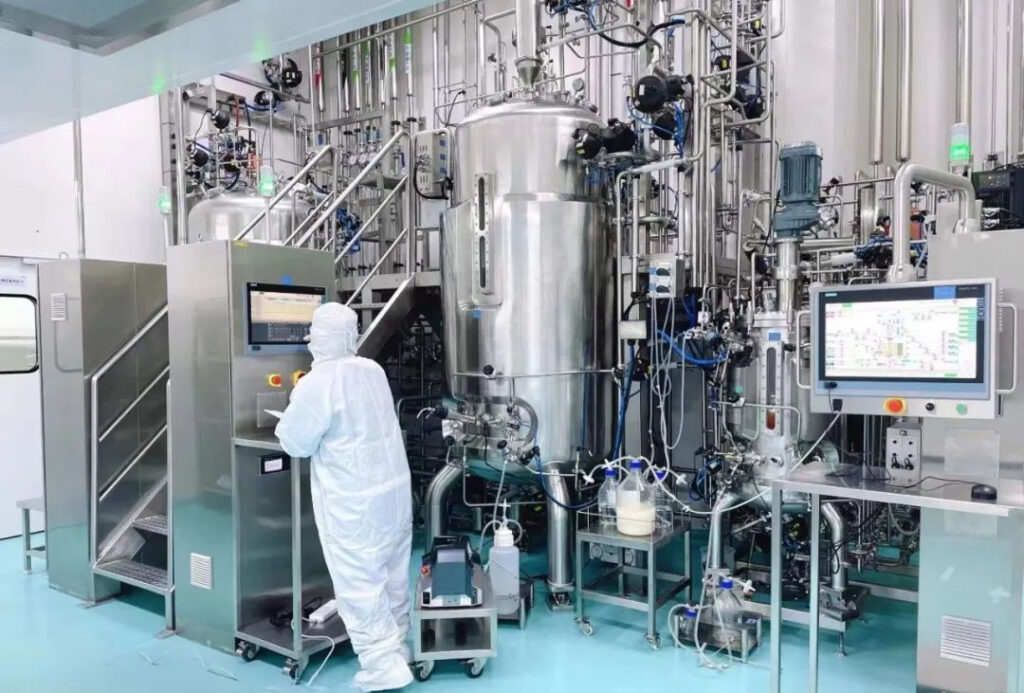
animal cells are very different from microbial cells, there are strict requirements for in vitro culture, such as animal cells are very sensitive to shear, and the design of the reactor cannot be as high as the shear force of microbial cells.
Therefore, traditional microbial cell reactors should be modified to be suitable for animal bioreactors. It is very important and urgent to develop new bioreactors according to the characteristics of animal cells.
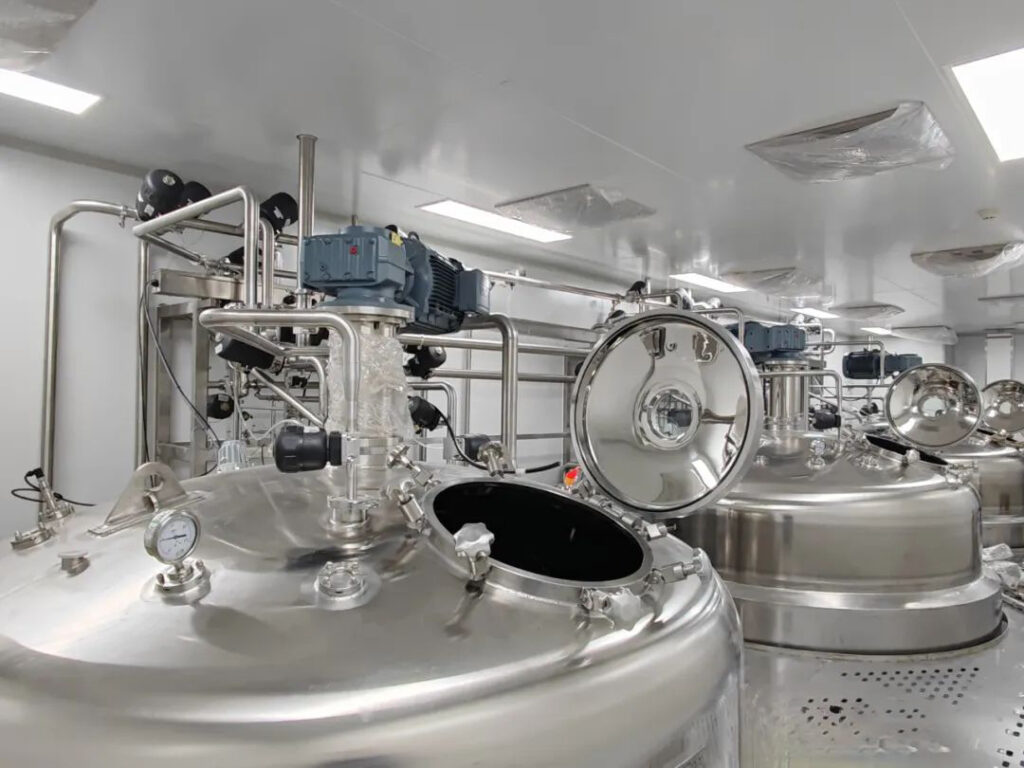
animal cell culture process
Introduction to Animal Cell Culture:
Animal cell culture is a method of taking cells from animals and dispersing them into single cells, simulating the growth environment in vivo, and making cells continue to survive, grow, proliferate and maintain structure and function in vitro under sterile, suitable and rich nutritional conditions. door technology.
In vitro culture can be divided into primary culture and subculture. Primary culture refers to the process of initial culture of cells taken from the body. The cultured cells proliferate for about 10 generations and are called primary cells; the continued transfer culture from the primary cultured cells is called subculture.
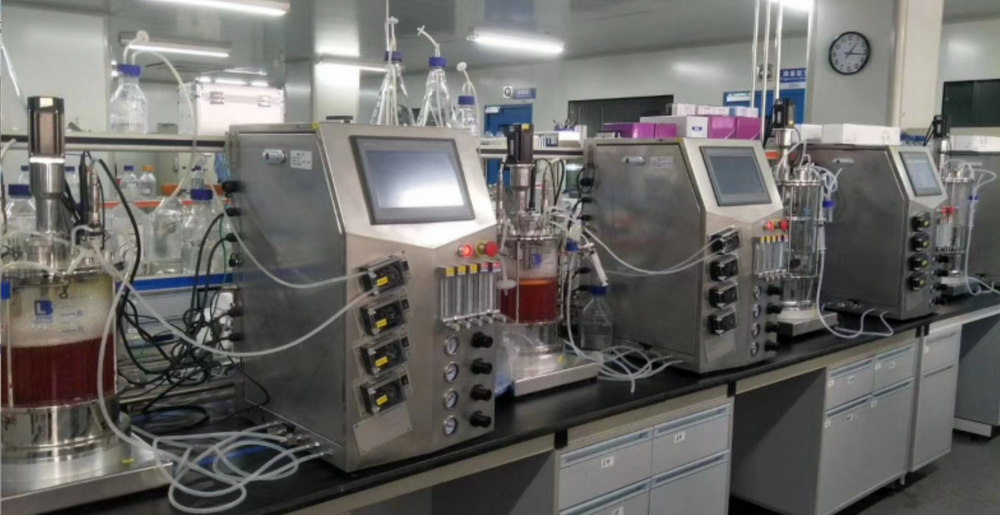
Types of in vitro culture of animal cells
(1) Suspension culture
Refers to the process of cells growing freely in suspension in an incubator. It is mainly used for anchorage-independent cells. This type of cells does not need to be attached to the wall in vitro and can be cultured in suspension in the culture medium by means of microorganisms.
Cells derived from blood, lymphoid tissue, many tumor cells (including hybridoma cells) and many recombinant cells belong to this category of cells. Due to the suspension growth, the cell density is generally high, which is easy for large-scale production and process control.
(2) Adhesive culture
Refers to cell culture that must be attached to the surface of a solid medium and is mainly suitable for anchorage-dependent cells (also known as adherent cells), and most animal cells belong to this type.
The growth of this type of cells needs to attach to some solid and semi-solid surfaces with an appropriate amount of positive charges. After the cells attach and grow, they are no longer the original shape, and the shape is generally simplistic, mainly including fibroblast type, epithelial type, Wandering and polymorphic, etc.
(3) Immobilized culture
This type of culture is suitable for both anchorage-dependent cells and anchorage-independent cells. It has the advantages of high cell growth density, strong resistance to shear force and anti-pollution.
Due to the different cultured cells, the way of immobilized culture is also different. Generally, anchorage-dependent cells are usually embedded with collagen, while anchorage-independent cells are usually embedded with calcium alginate. Common cell immobilization methods mainly include adsorption, covalent attachment, ion/covalent cross-linking, embedding and microencapsulation.
Animal cell culture bioreactor
Large-scale cultivation of animal cells requires special reactors. Unlike microorganisms and plant cells, animal cells have no cell wall on the outer layer, and their plasma membranes are brittle. They are sensitive to shear and have strict requirements on the in vitro culture environment.
Therefore, traditional microbial fermentation reactors cannot be used for large-scale cultivation of animal cells, and low shear effects, better transfer effects and mechanical properties are the principles that must be followed in the design or improvement of such reactors.
Since the 1970s, bioreactors for cell culture have developed greatly, with more and more types and larger scales, but the main structural forms of reactors are still stirring, airlift and fixed bed.
In addition to the culture for the purpose of artificial mutagenesis, the design principle of the bioreactor used for animal cell culture should be to simulate the growth environment of the culture in the organism as much as possible. Due to the particularity of animal cell growth, special attention needs to be paid to the design of the reactor structure and the selection of special carriers.
Bioreactors for animal cell culture generally include: airlift bioreactors, hollow fiber tube bioreactors, fluidized bed bioreactors, stirred tank bioreactors, stacked bed bioreactors, disposable bioreactors, membrane bioreactor, etc.