
1. Gate valve
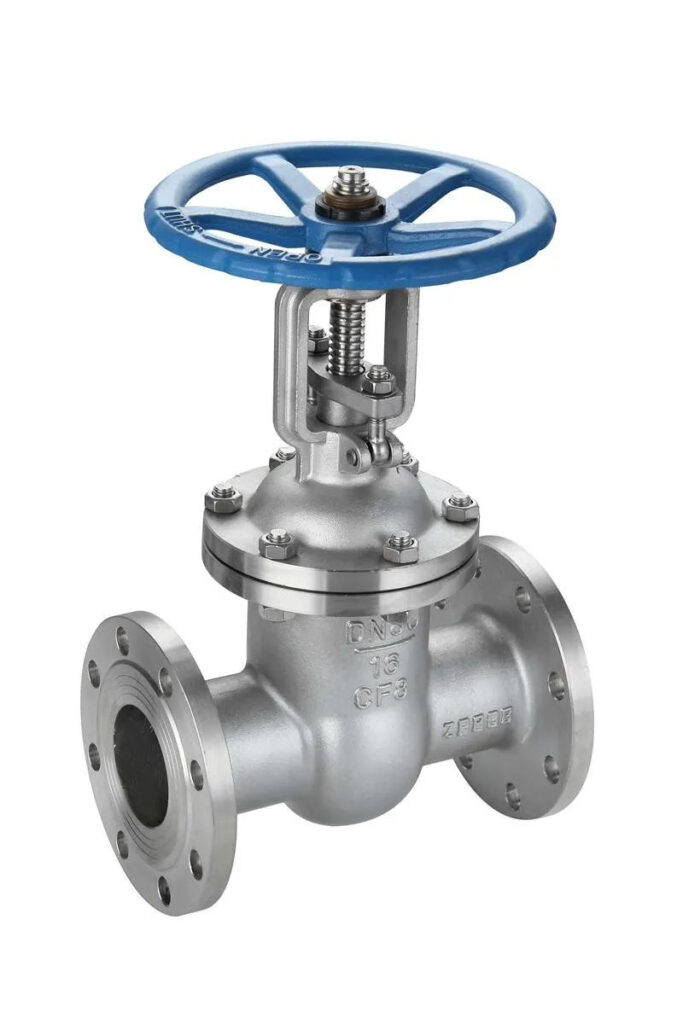
Gate valve refers to the valve whose closing member gate moves along the vertical direction of the channel axis. It is mainly used to cut off the medium on the pipeline, that is, it is fully open or fully closed.
General gate valves cannot be used to regulate flow. It can be applied to low temperature and high pressure as well as high temperature and high pressure, and it can be used according to different materials of the valve. However, gate valves are generally not used in pipelines that transport media such as mud.
Advantage:
① After the gate valve is opened, the medium channel inside the valve body is straight through without any obstruction, and the flow resistance is very small.
② When opening and closing, the direction of movement of the gate valve is perpendicular to the flow direction of the medium, the pressure is small, and the opening and closing is less labor-saving.
③The height of the gate valve is large, so the opening and closing time is relatively long, and water hammer is not easy to occur.
④ Both sides of the gate valve channel are symmetrical, and the medium can flow in any direction on both sides, so the installation of the gate valve is very convenient.
⑤The structure length is short, the manufacturing process is good, and the application range is wide.
⑥ The structure length is relatively short.
Shortcoming:
①The sealing surface of the gate valve is very easy to wear, which affects the service life of the valve, and it is troublesome to maintain.
②The structure of the gate valve is relatively complicated, and the processing steps are cumbersome, especially the sealing surface on the gate seat is not easy to process, and there are many parts, so the price is relatively expensive.
③The overall size is large, it needs a certain space to open, and the opening and closing time is long.
2. Butterfly valve
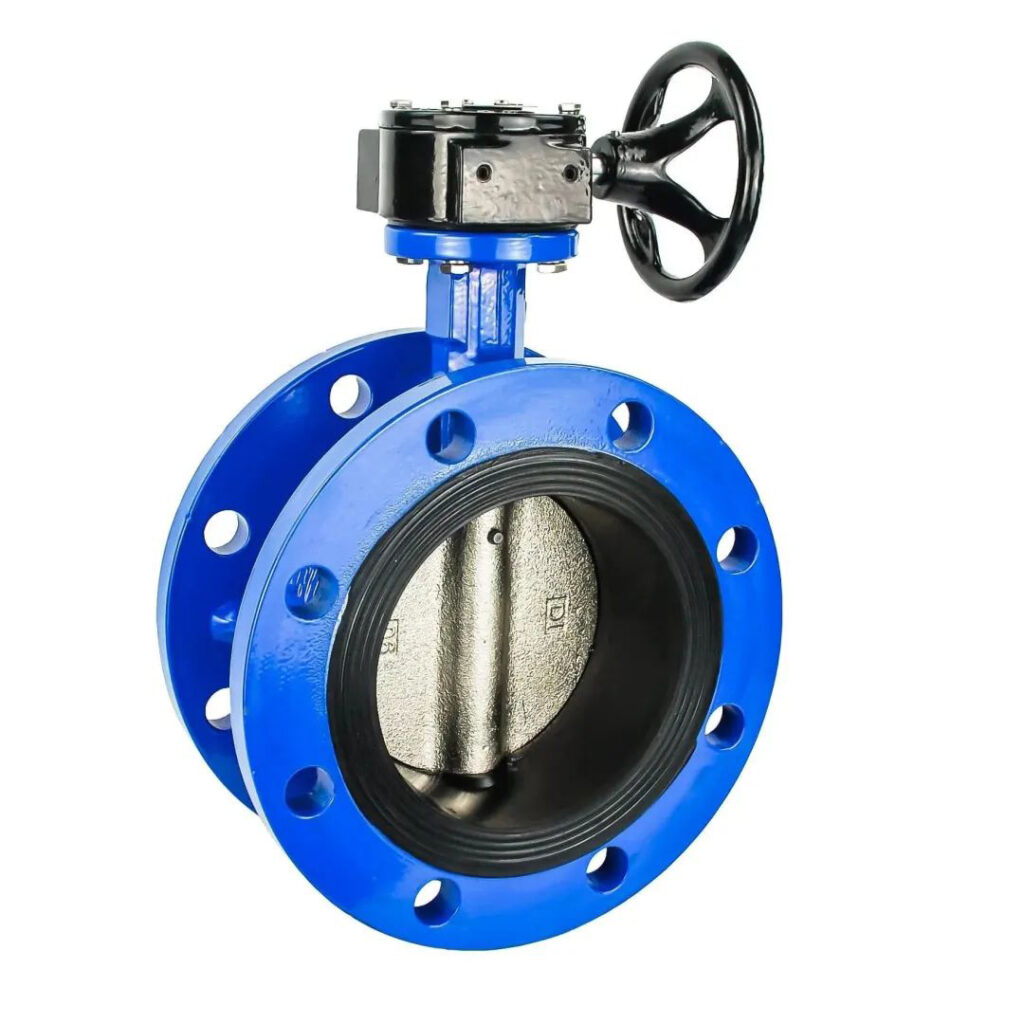
Butterfly valve is a kind of valve that uses disc type opening and closing parts to turn back and forth about 90° to open, close and adjust the fluid passage.
Advantage:
①The opening and closing are convenient, fast, labor-saving, with small fluid resistance and frequent operation.
②Simple structure, small size, short length, small size and light weight. Suitable for large diameter valves.
③ It can be used for media with suspended solid particles, and it can also be used for powdery and granular media according to the strength of the sealing surface. It is suitable for two-way opening and closing and adjustment of ventilation and dust removal pipelines, and is widely used in gas pipelines and waterways in metallurgy, light industry, electric power, petrochemical systems, etc.
Shortcoming:
①The range of pressure and working temperature is small. Due to the limitation of butterfly valve structure and sealing material, it is not suitable for high temperature and high pressure pipeline system. The general working temperature is below 300°C and below PN40;
③ The sealing performance is poorer than that of ball valves and globe valves, so it is used in places where the sealing requirements are not very high.
3. Ball valve
The ball valve is evolved from the plug valve. Its opening and closing part is a sphere, which can be opened and closed by rotating the sphere 90° around the axis of the valve stem.
The ball valve is mainly used to cut off, distribute and change the flow direction of the medium on the pipeline, and the ball valve designed with a V-shaped opening also has a good flow regulation function.

Advantage:
① Has the lowest flow resistance (actually 0);
②Because it will not get stuck when working (when there is no lubricant), it can be reliably applied to corrosive media and low boiling point liquids;
③In a larger pressure and temperature range, it can achieve complete sealing;
④ Fast opening and closing can be realized, and the opening and closing time of some structures is only 0.05~0.1s to ensure that it can be used in the automation system of the test bench. When opening and closing the valve quickly, the operation has no impact;
⑤ The spherical closing member can be automatically positioned on the boundary position;
⑥The working medium is reliably sealed on both sides;
⑦When fully open and fully closed, the sealing surface of the ball and the valve seat is isolated from the medium, so the medium passing through the valve at high speed will not cause erosion of the sealing surface;
⑧ With compact structure and light weight, it can be considered as the most reasonable valve structure for low temperature medium system;
⑨The valve body is symmetrical, especially the welded valve body structure, which can well withstand the stress from the pipeline;
⑩The closing parts can withstand the high pressure difference when closing. The ball valve with fully welded body can be directly buried in the ground, so that the internal parts of the valve will not be corroded, and the maximum service life can reach 30 years. It is the most ideal valve for oil and natural gas pipelines.
Shortcoming:
①Because the most important seat sealing ring material of ball valve is polytetrafluoroethylene, it is inert to almost all chemical substances, and has small friction coefficient, stable performance, not easy to aging, wide temperature application range and excellent sealing performance comprehensive features.
However, the physical properties of PTFE, including high coefficient of expansion, sensitivity to cold flow and poor thermal conductivity, require that seat seals must be designed around these properties.
Therefore, when the sealing material hardens, the reliability of the seal is compromised. Moreover, the temperature resistance level of PTFE is low, and it can only be used at temperatures below 180°C. Above this temperature, the sealing material will age. In the case of long-term use, it is generally not used at 120°C.
② Its adjustment performance is worse than that of the stop valve, especially the pneumatic valve (or electric valve).
4. Globe valve
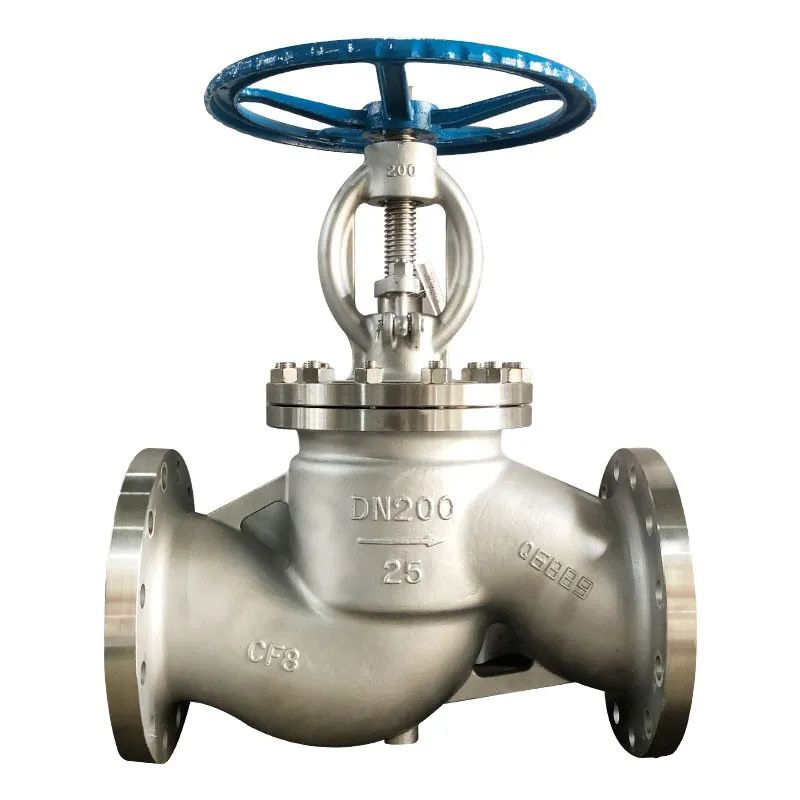
Globe valve: refers to the valve whose closing member (disc) moves along the centerline of the valve seat. According to the movement form of the disc, the change of the port of the valve seat is proportional to the stroke of the disc.
Because the opening or closing stroke of the valve stem of this type of valve is relatively short, and it has a very reliable cut-off function, and because the change of the valve seat opening is proportional to the stroke of the valve disc, it is very suitable for flow adjustment. Therefore, this type of valve is very suitable for cutting or regulating and throttling.
Advantage:
① During the opening and closing process, since the friction between the disc and the sealing surface of the valve body is smaller than that of the gate valve, it is wear-resistant.
②The opening height is generally only 1/4 of the seat channel, so it is much smaller than the gate valve;
③ Usually there is only one sealing surface on the valve body and the disc, so the manufacturing process is relatively good and easy to maintain;
④ Since the filler is generally a mixture of asbestos and graphite, the temperature resistance level is relatively high. Generally steam valves use globe valves.
Shortcoming:
① Since the flow direction of the medium through the valve has changed, the minimum flow resistance of the globe valve is also higher than most other types of valves;
② Due to the longer stroke, the opening speed is slower than that of the ball valve.
5. Plug valve
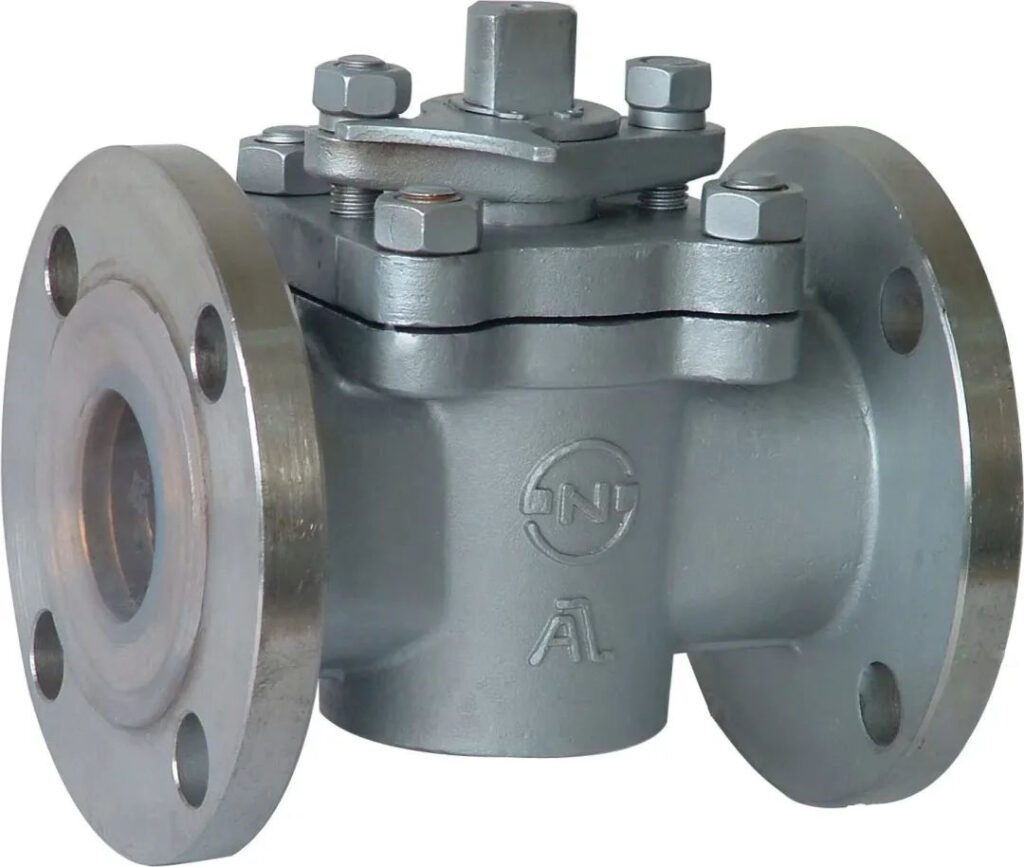
Plug valve: refers to a rotary valve with a plunger-shaped closing part. Through a 90° rotation, the channel port on the valve plug communicates with or separates from the channel port on the valve body to realize opening or closing.
The shape of the valve plug can be cylindrical or conical. Its principle is basically similar to that of the ball valve. The ball valve is developed on the basis of the plug valve. It is mainly used in oilfield exploitation and also in petrochemical industry.
Advantage:
①For frequent operation, quick and easy opening and closing.
②Fluid resistance is small.
③Simple, relatively small in size, light in weight, and easy to maintain.
④ Good sealing performance.
⑤Restricted by the installation direction, the flow direction of the medium can be arbitrary.
⑥ No vibration, low noise.
Shortcoming:
①The cover is too large, resulting in too much torque and not flexible enough.
②Affected by weight, the caliber is limited.
③ In actual use, if a large-sized valve is used, the inverted plug structure must be used, which will easily affect the sealing effect.