
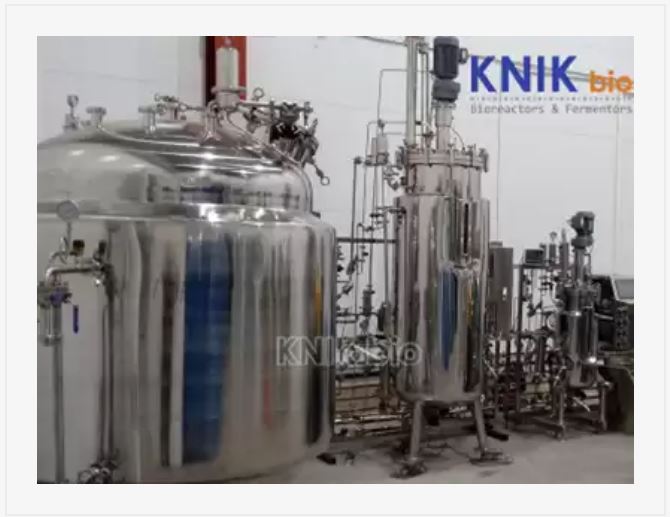
Grasping the Fundamentals of Fermentation on a Scale Fermentation plays a role in various sectors ranging from food and beverages to pharmaceuticals and biologics. Essentially it involves a process where microorganisms convert sugars into different substances like alcohol or organic acids. This conversion takes place under conditions such as temperature and environment usually within a specialized vessel called a KNIK fermentor. A fermentor, also referred to as a bioreactor is specifically designed to support the growth of microorganisms during fermentation. It is typically constructed using stainless steel, glass or plastic materials and includes components like an agitator, temperature control system and pH control system.
Exploring Types of Fermentors and Their Key Components
There are several varieties of fermentors each with its own set of pros and cons. The most commonly employed fermentor types in large scale fermentation processes are batch, fed batch and continuous fermentors.
Fermentors play a role in supporting microbial growth and metabolic processes by creating an environment for the microorganisms to thrive. They achieve this through mechanisms such as mixing the fermentation broth to ensure uniform nutrient distribution and oxygen supply. Controlling temperature within the range is also crucial as different microorganisms have preferences for their growth. Additionally maintaining the pH levels helps create conditions that are conducive to microbial activity. By carefully regulating these factors fermentors optimize the conditions for microorganisms to grow and carry out their metabolic functions efficiently.
Fermentors are specially designed to create an environment for microbial cells to thrive and carry out their metabolic processes. These setups are fine tuned to provide conditions that favor the specific microorganisms involved in the fermentation process.
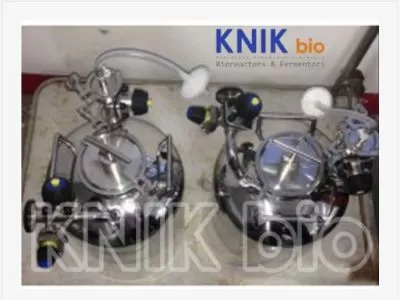
Controlling the temperature is crucial for ensuring growth and metabolic activity since different microorganisms have preferences for temperature ranges. The mixing system plays a role in blending the nutrients so that all microorganisms can access the substrates they need and it also aids in removing waste products.
Maintaining the pH level is another aspect of fermentors as it influences the growth and metabolism of microorganisms. The pH control system monitors and keeps a pH range that is ideal, for the microorganisms being utilized.
From Brewing to Biologics and Beyond
Fermentation plays a role in various sectors including brewing, winemaking, pharmaceuticals and biologics. In the realm of food and beverages fermentation is utilized to create items like beer, cheese, yogurt and vinegar. In healthcare it aids in the production of antibiotics, vaccines and vitamins.
The advent of DNA technology has led to progress, in the production of biologics making fermentors even more essential. Biologics are molecules, like proteins or peptides that are generated through microbial cells. Fermentors offer the environment and nutrients needed, for the efficient production of biologics.
Common Problems and Solutions
Like any process, fermentation can come with its fair share of challenges. Common issues that arise include contamination caused by unwanted microorganisms and inadequate aeration for the microorganisms. To prevent contamination it’s important to properly sterilize the fermentation vessel and keep the surroundings free from unwanted microorganisms. Insufficient aeration can be addressed by fine tuning the agitation system to ensure that the microorganisms receive an adequate supply of oxygen to support their metabolic functions.
In summary fermentors play a role in various industries by facilitating controlled microbial growth and metabolic processes. Having a grasp of the fundamentals of large scale fermentation the different types of le fermentor their key components and how they optimize microbial growth and metabolism can greatly contribute to successful fermentation outcomes.