
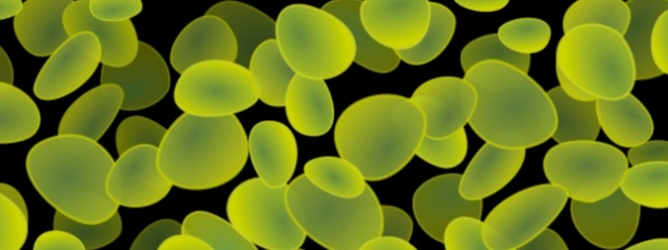
Pasteurised Picrospermum, a methanol-nutritional yeast, is a group of yeasts capable of using methanol as its sole carbon and energy source.
Like other yeasts, it exists mainly as a haploid during the asexual growth period, and when the environment is nutrient-limited, it often induces the mating of two physiologically different spliced haploid cells to fuse into a diploid.
I. Process of Picrytis production
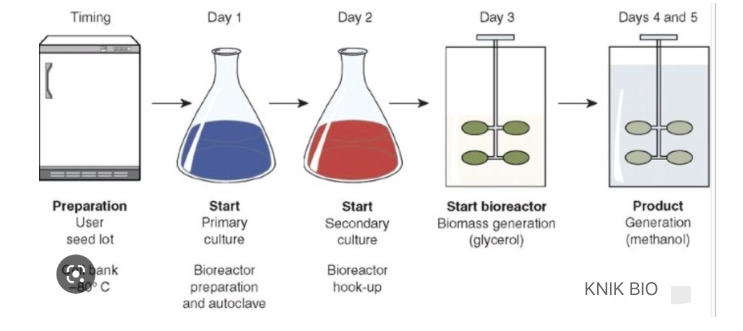
1. cell proliferation and multiplication;
2. a transitional phase of batch flow addition (glycerol or glucose);
3. induced expression stage (methanol);
Carbon sources at all stages are limiting substrates, and kinetic modelling of their replenishment rates is the basis of efficient expression
Advantages and disadvantages of Saccharomyces cerevisiae
There is no natural plasmid in Saccharomyces cerevisiae, so the expression vector needs to undergo homologous recombination with the host chromosome, and integrate the exogenous gene expression framework into the chromosome to achieve the expression of the exogenous gene. It includes promoter, cloning site of the exogenous gene, termination sequence, screening marker and so on.
Expression vectors are all shuttle plasmids, which are first replicated and amplified in E. coli and then introduced into host yeast cells. In order for the product to be secreted extracellularly, the expression vectors also need to carry a signal peptide sequence.
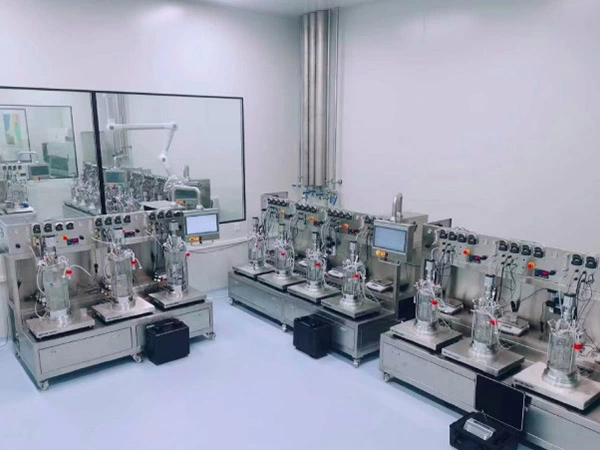
KNIK BIO fully automated laboratory reactor
Advantages
1. it has the promoter of alcohol oxidase AOX1 gene, which is one of the strongest promoters with the most stringent regulatory mechanism at present;
2. high expression efficiency, its expression of exogenous protein can account for more than 90% of the total expressed protein, which is conducive to the isolation and purification of the target protein;
3. High density culture can be achieved in simple synthetic medium;
4. the expression plasmid can be stably integrated in the form of single copy or multi-copy at the specific site of the genome;
5. the yeast can use methanol as the only carbon and energy source, while the majority of microorganisms cannot use methanol as a carbon source, which can reduce pollution.
Deficiencies
1. Long fermentation cycle;
2. methanol is flammable, explosive and toxic;
3. the drugs used for screening high-yielding strains are expensive;
4. the culture medium and culture conditions are not mature.
III. Factors affecting the fermentation of Brettanomyces cerevisiae
In general, the more important influences are glucose concentration, temperature, pH, dissolved oxygen, nitrogen source, nutrient salts and the concentration of the bacteria themselves.
1. Temperature
With the exception of a few special strains, the majority of yeasts are usually suitable for growth at 20-25°C. In addition, the higher the temperature, the more favourable it is for avoiding contamination. In addition, the higher the temperature, the more favourable to avoid contamination by stray bacteria.
The optimum fermentation temperature for Picrosporum is 30°C, and the growth temperature is 25-30°C. Industrial fermentation is generally controlled within the range of 30-35°C, where the yeast grows and reproduces normally. Once exceeding this temperature range, the enzyme will be inactivated quickly with the increase of temperature, and the yeast cells will be easily senescent, which will shorten the fermentation cycle and thus affect the expression of the target protein.
2. pH
Picot yeast cells can adapt to a wide range of pH environment, can grow in the environment of pH2.0~7.5, for different kinds of proteins, the adaptive pH range is also different, and different proteins to different protease tolerance is also different, choose the appropriate pH can promote cell growth at the same time to avoid the reduction of protease activity, to prevent the degradation of the target proteins.
In industrial production, the pH is generally controlled between 4.5 and 5.5, and in the fermentation process, the online addition of ammonia is often used to adjust the pH of the fermentation broth, and ammonia can also be used as a source of nitrogen in the fermentation process, so as to make the bacterium grow rapidly, and ultimately allow the expression of the target product completely.
3. Glucose concentration
Experimentally, it was proved that the initial glucose concentration of 25g/L or more will gradually reduce the rate of the bacterium, which indicates that higher glucose concentration has a greater inhibition of the growth of the bacterium, in the initial glucose concentration of about 20g/L Beechcraft yeast growth rate is higher.
4. Dissolved Oxygen
Beechcraft yeast is an aerobic microorganism, its growth and metabolism require the participation of oxygen, dissolved oxygen is one of the most important indicators of yeast cell growth process.
DO is kept at a low level that the bacteria are consuming the carbon source in the fermentation broth, and the rise of DO indicates that the carbon source is exhausted and the bacteria are starving, so it is necessary to replenish the carbon source in time. When the oxygen is insufficient, the growth of the bacteria will be limited, when the DO is too high, the high concentration of oxygen radicals in the fermentation broth will make the bacteria die of poisoning. Dissolved oxygen in the fermentation process is generally controlled at 30%, while in the induction stage is generally maintained at 20%.
5. Bacterial concentration
Fermentation performance was examined by varying different initial yeast cell concentrations, and it was found that the initial cell concentration had a significant effect on the fermentation performance of Picot yeast. When the initial cell concentration was lower, the cell growth rate was faster and less protein was expressed; while when the initial cell concentration was higher, the substrate utilisation rate was slower and the protein concentration and yield were higher because the yeast cells utilised the substrate to express proteins rather than for cell growth.
In the methanol induction phase, try to achieve a larger concentration of bacteria before proceeding with induction to adapt to the methanol environment and mitigate toxicity. Currently, methanol induction is generally stopped at a wet weight of 180~220 g/L for supplementation.
6. Nitrogen source
In industrial production, the seed medium is still using organic nitrogen sources such as peptone as a nitrogen source, the fermentation process in the adjustment of pH, will be supplemented with a large amount of ammonia, which at the same time also provides a source of nitrogen for the growth of yeast cells.
7. Inorganic salt
Nutrient salts necessary for Beechcraft yeast are CaCl2, MgSO4, K2SO4, KH2PO4 and K2HPO4. Trace elements such as zinc, cobalt, manganese, molybdenum, copper, iron and other elements are also indispensable for yeast cells, and some of them are cofactors for enzymes, and some of them are activators for enzymes. These trace elements promote yeast growth and product synthesis at low concentrations, while at high concentrations they poison the yeast and show inhibitory effects.
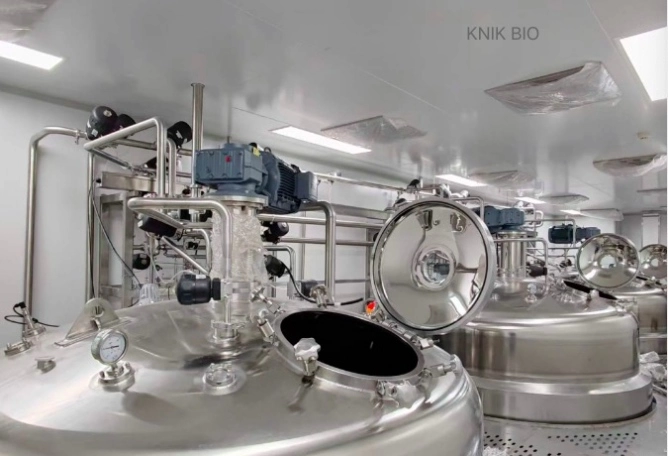
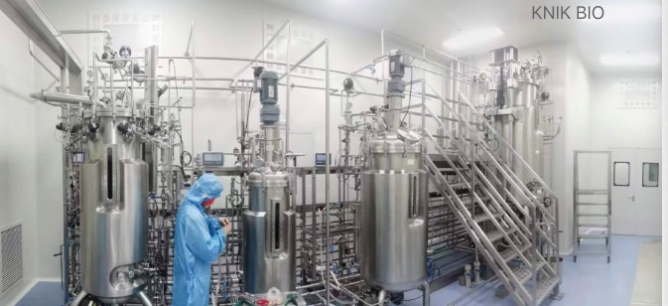
KNIK BIO Fully automated industrial fermentation line
About KNIK BIO
KNIK BIO has a wealth of experience in the manufacture of various types of reactors and pressure vessels. With a team of experts in the fields of biological reaction, fermentation process, machinery manufacturing and automation control, our scientific research and technology are always in the leading position in China and the international first-class level, which provides you with a comfortable, assured and safe product experience.