
Recently, the journal Nature announced the world’s top seven breakthrough technologies to watch in 2025, of which the life sciences field accounts for four seats.
From cancer treatment to microplastic pollution control, from artificial intelligence to microbial analysis, these breakthrough technologies are quietly changing our lives.
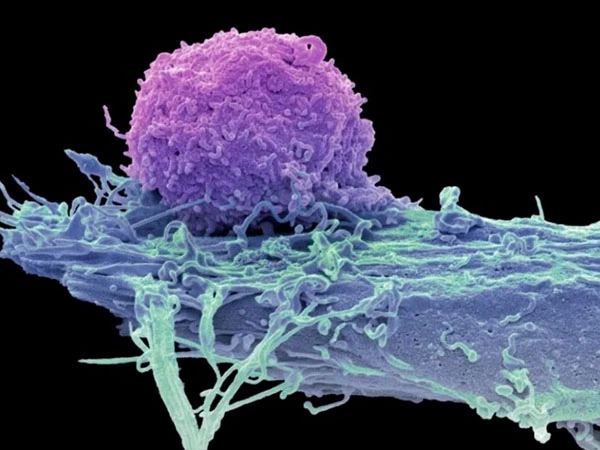
CAR-T cell therapy: “Nemesis” for cancer and autoimmune diseases
CAR-T cell therapy has made tremendous progress over the past few years and has become the standard of care for many blood cancers. Tens of thousands of people around the world have received this treatment, and some patients have even achieved long-term cancer-free survival.
Today, CAR-T cell therapy is not only making a splash in the treatment of hematologic cancers, but also showing great potential in the field of solid tumors and autoimmune diseases. For example, a research team at Massachusetts General Hospital developed a CAR-T therapy for recurrent glioblastoma, and some patients’ tumors rapidly shrank or even disappeared after treatment.
In addition, a German research team successfully treated patients with severe systemic lupus erythematosus (SLE) using CAR-T cell therapy, bringing new hope to patients with autoimmune diseases.
Bioremediation technology: “No hiding place” for microplastic pollution
Microplastic pollution has become a major threat to the global environment, but scientists have discovered that certain bacteria are able to tolerate and degrade microplastics as a source of nutrition.
A team from Brunel University in London is investigating how these bacteria can form biofilms on plastic debris to degrade microplastics more efficiently.
Meanwhile, a team from the University of Missouri in the United States has developed a platform that utilizes white-rot bacteria to degrade harmful chemicals, which is expected to play an important role in areas such as wastewater treatment.
Artificial Intelligence Basic Model: Unlocking the “Code” of Biological Systems
With the rapid development of artificial intelligence technology, biologists have begun to utilize the powerful capabilities of AI to study complex biological systems.
For example, researchers have developed scGPT, an AI model based on single-cell transcriptome data that accurately classifies cell types, identifies gene networks, and predicts the effects of mutations on gene expression.
In the future, scientists plan to integrate multiple basic models to build “virtual cells” to more comprehensively capture biological activity in cells and tissues, providing more powerful tools for disease research and drug development.
Single-cell microbial analysis: exploring the “mysteries” of the microbial world
The diversity of microbial communities has always been a major focus of scientists’ research. In recent years, single-cell microbial analysis has made significant progress. For example, the MATQ-seq technology developed by the Helmholtz Institute in Germany is able to analyze the gene expression of thousands of microbial cells, which is a powerful support for the study of antibiotic resistance.
In addition, a team at the University of Toronto developed the DoTA-seq technology, which reveals the mysteries of microbial DNA by capturing individual cells in microdroplets and sequencing them. These techniques will help us better understand microbial ecology and evolution.