
If you’ve ever wondered how scientists grow cells, make vaccines or brew beer on an industrial scale, then you’re already halfway to knowing what a bioreactor is. Put simply, a bioreactor is any system or vessel that provides the optimum conditions for any form of bio-reaction to occur typically involving cultures of cells, bacteria or enzymes. Then it manages temperature, oxygen, pH and nutrients such that the life contained within can do its job well. Whether used to make medicines or break down waste, the industrial use of bioreactors is a big deal in industries that rely on living things to get results.
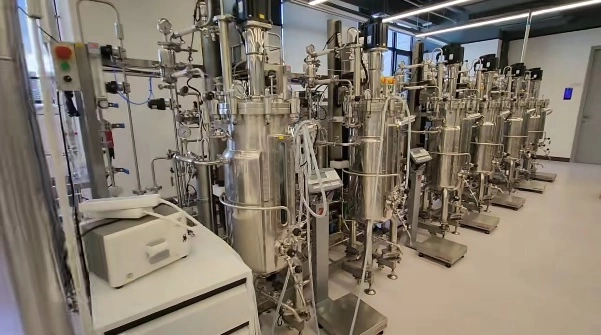
Defining the Modern Bioreactor.
Today’s bioreactor is more than simply a tank with a few tubes sticking out of it. It is a precision-crafted mechanism, designed on purpose to support life. At the heart of it, a bioreactor is a contained letting of a certain amount of living cells, the bacteria, or even the microorganisms, carry some very specific duties. These could be anything from making a life-saving drug to breaking down organic waste.
The bioreactors of today are constructed with capabilities to closely control important upstream process factors such as temperature, oxygen level, pH and mixing. Why? Because the tiniest variations in these conditions can change the way cells act. For instance, if the temperature is too high, cells could die. If there’s not much oxygen, they may cease growing. The idea is to establish a perfect environment so the cells can thrive and function properly.
Modern bioreactors of various configurations and designs exist for various applications. A small lab might have a glass benchtop bioreactor big enough for a few liters, while a pharmaceutical plant could have huge stainless steel bioreactors that hold thousands of liters. Others are agitated by mechanical paddles. The contents may be mixed by air bubbles, among other techniques.
One applied example is in vaccine manufacturing. Companies grow modified cells inside bioreactors to make proteins that are then purified and used in vaccines. Without such systems, it would be nearly impossible to manufacture enough doses to protect whole populations.
A case in point is sustainable agriculture. Some businesses cultivate the algae productively in bioreactors for fish food or biodiesel. Closed systems like theirs let them grow large quantities, cleanliness and efficiently.
Explaining what a modern bioreactor does helps us to better understand why it’s so important not just in science labs, but in our everyday efforts to address pressing problems relating to health, food, the environment and more.
Core Components of a Bioreactor System.
To understand how a bioreactor operates, it is helpful to deconstruct it into its primary parts. Each part has a function that helps to maintain an environment that is “just right” for the organisms inside to develop and perform their function. Whether you are dealing with bacteria or yeast or animal cells, most bioreactor systems function in much the same way.
The Vessel (or Reactor): This is the container in which it all goes down. It’s typically constructed from either stainless steel or glass, depending on the size. The volume may vary from a few litres to several thousands. 3. The cells inside are suspended in a liquid, called culture medium, that gives them nutrients.
Agitator or Mixing System: Bioreactors stir the contents to keep them thoroughly mixed and uniform in temperature, using a mechanical stirrer (or sometimes bubbling gas to pass the liquid around). This helps ensure the cells have equal access to oxygen and nutrients.
Sensors and Probes: Contemporary bioreactors include sensors which consistently monitor variables such as pH, temperature, concentration of oxygen, and pressure. If anything exceeds the established safe range, the system can correct automatically.
Heating and Cooling Jackets: These wrap around the vessel to control the temperature. If the cells begin to generate heat during growth — in other words, if destab is destabilizing the folding machine, the refrigerator kicks in to restore the temperature to the proper level.
Gas Supply System: Cells require air, usually oxygen and at times carbon dioxide. The gas system dictates if, and when, air is added; it is introduced in the form of either fine bubbles or through membranes.
Unit That Controls Everything: It is the brain of the operation. It ties in with all the sensors and systems, allowing the operator to tune settings, or monitor trends in real time.
All together, these components constitute a full bioreactor system that is able to function in a robust, safe, and efficient manner.
Key Applications of Bioreactors.
And bioreactors are more common than you might realize. Though the way medicines are made is best known, the reach of these facilities extends more broadly. Wherever you need to cultivate cells or microorganisms in an engineered and contained process, there’s likely a bioreactor in use.
The pharmaceuticals is one of the most essential categories. Drug companies cultivate cells that create things like insulin, antibodies or vaccines, using bioreactors. For the COVID-19 pandemic, for instance, one used large-scale bioreactors to cultivate the cells needed for vaccine manufacture. Without them, there is no way that they would have been able to produce enough to make enough doses quickly enough.
Bioreactors are also used in food and beverage industries. Consider the making of beer or the fermentation of yogurt is great instances, both. Breweries employ bioreactors (often referred to as fermenters in that context) to cultivate yeast that munches on sugar to form alcohol. In dairy, bacteria grow in bioreactors to produce the cultures that enable yogurt to achieve its taste and texture.
Environmental technology is another huge one. Some wastewater treatment plants deploy bioreactors stocked with friendly bacteria that consume noxious waste. These systems may be able to clean water more effectively and with fewer chemicals.
Agribusinesses and animal-feed companies utilize bioreactors to farm algae or fungi. These creatures yield high protein and may eventually prove to be more sustainable as feed than traditional sources.
In research labs and biotech startups, smaller bioreactors are used to prove out new ideas whether that’s how to grow meat in a lab, develop new enzymes for detergents, or make sustainable materials like bio-plastics.
Regardless of the industry, the aim is the same: Grow the right organisms, in the right conditions, to produce something valuable. Bioreactors aid in turning that aspiration into a predictable, dependable process.
Types of Bioreactors.
Different types of bioreactors are tailored to different forms of processes or products. The right type depends on what you’re growing, how sensitive it is to light, and what you want to make. Here is a brief primer on some of the most prevalent and how they operate.
Stirred Tank Bioreactor (STR): It is the most common type. It resembles a giant tank with a spinning blade attached and is used to produce everything from beer to vaccines. The stirrer also holds the contents of the bioreactor, stirring, so that the cells have consistent access to the air and nutrients.
Airlift Bioreactor: For circulating the liquid, an airlift bioreactor uses air bubbles instead of a mechanical stirrer. It’s more gentle on delicate cells, like animal or plant cells, which can get beat up during too much mixing. It also uses less energy.
Fixed ganglia: In this case, the cells are fixed on either a solid support or bedding material, not being suspended in liquid. This configuration is frequently found used in waste water treatment or enzyme manufacture. It’s also nice for cells that don’t flow in liquid so well.
Fluidized Bed Bioreactor: This kind also employs carriers, but they are allowed to float around a bit more in the fluid. It also allows for better mixing and oxygen circulation, which is particularly useful when one produces at a larger scale.
Single-Use (Disposable) Bioreactors: These are a more recently developed type of system, fabricated out of plastic bags rather than stainless steel. They are predominantly used in smaller-batch production or if you’re conducting a pilot study. You use them once and you throw them away — no washings required, so it saves a lot of time.
Each bioreactor has its own advantages. The trick is to tailor the design to the biology and the purpose of the operation.
Why Precision Matters?
Handling a bioreactor is like walking a tightrope: Little stumbles can result in a serious fall. That’s why precision is not just a luxury; it’s imperative. Each living cell within a bioreactor requires the appropriate mix of temperature, oxygen, nutrients and pH to remain healthy and productive. If any of those conditions goes awry, the entire batch can be ruined.
Think of how it would be if you tried to make a cake and you didn’t set the temperature correctly on the oven. You’ll end up with something edible, is all, probably not the thing you wanted. Now imagine that, but a high-stakes version. Except you’re not making a cake — you’re growing cells to produce medicine, clean wastewater or create food. And maybe instead of minutes, you spend days or weeks going through your process.
Say you’re developing a vaccine. If the bioreactor gets too low on oxygen, the cells could stop growing. The temperature gets too high, and they could die. That’s work, in hours or even days lost. And worse yet, you may not realize the issue until it’s too late. This is the reason why up-to-date bioreactors are equipped with on-line sensors and control systems. And such tools help operators adjust settings on the fly and ensure things do not stall.
Precision also matters for consistency. When you’re making the same product every week, you have to know that each batch is the same as the one before that. Any deviation can be a matter of safety, quality or performance particularly in fields like pharma or food.
Put simply, it is precision that transforms a bioreactor from mere tank to a dependable production system. It’s the difference between thinking and knowing, between trying and doing.
Why Choose KNIKbio Bioreactors for Your Bioprocessing Needs?
There are so many options when it comes to choosing a bioreactor system for your lab or production facility that it can be very confusing. But what it all comes down to is performance you can trust, support that provides you with peace of mind, and quality that brings it all together. That is where KNIKbio shines not with flashy marketing, but in the way that their bioreactors are engineered to make the actual work easier.
Click here to find out more about why KNIKbio bioreactors are the Details Life Style Optimal for Utilizing. From scaling up from lab trials to pilot production, to running small scale full production batches, we have a fit for you. They are equipped with sophisticated control systems that sense and regulate important variables like temperature, pH and oxygen availability, for instance in real time. That translates to fewer surprises and more consistent outcomes.
There’s one thing users like, that is the convenience of the configuration. KNIKbio has options for both stainless steel and single-use depending on your process. So whether you’re dealing with delicate cell cultures, microbes, or high-volume fermentation, you’ll find a model to fit.
Maintaining the integrity of maintenance is also something KNIKbio takes seriously. The construction permits parts that require frequent cleaning or inspection to be readily accessible. That means less downtime and more productivity. And if something is amiss, their support team is fast to respond and provides practical troubleshooting help without the tech jargon or wait times.
In the final analysis, selecting for a bioreactor is not just about specs, it is about trust. KNIKbio provides users with the kit to run robust, repeatable, scaleable processes without overcomplicating. It’s a no-nonsense model well-suited for the type of team that wants nothing more from its equipment than for it to work – and keep working – while its members concentrate on the science.