
Mammalian cells have been used as vehicles for producing therapeutic proteins for decades. Therapeutic proteins are widely used in the diagnosis and treatment of diseases, forming a huge market. The global biopharmaceutical market was worth US$237.2 billion in 2018 and is expected to reach US$389 billion by 2024. During the forecast period from 2019 to 2024, the compound annual growth rate will reach 8.59%. From 2006 to 2010, approximately 55% of biopharmaceuticals were expressed in mammalian cells, and between 2010 and 2014, 60% of recombinant therapeutic proteins were also expressed in mammalian cells. Among them, monoclonal antibody drugs have the largest number. In 2019, the global monoclonal antibody market reached approximately US$164 billion, accounting for more than 50% of global biological products. It is the largest sub-sector in the global biological products industry. Therefore, the increasing demand for the production of protein products from mammalian cells has made the research and development of large-scale animal cell culture technology an important task in the field of biopharmaceuticals.
●Optimization and amplification of cell culture process based on multi-scale parameter correlation analysis
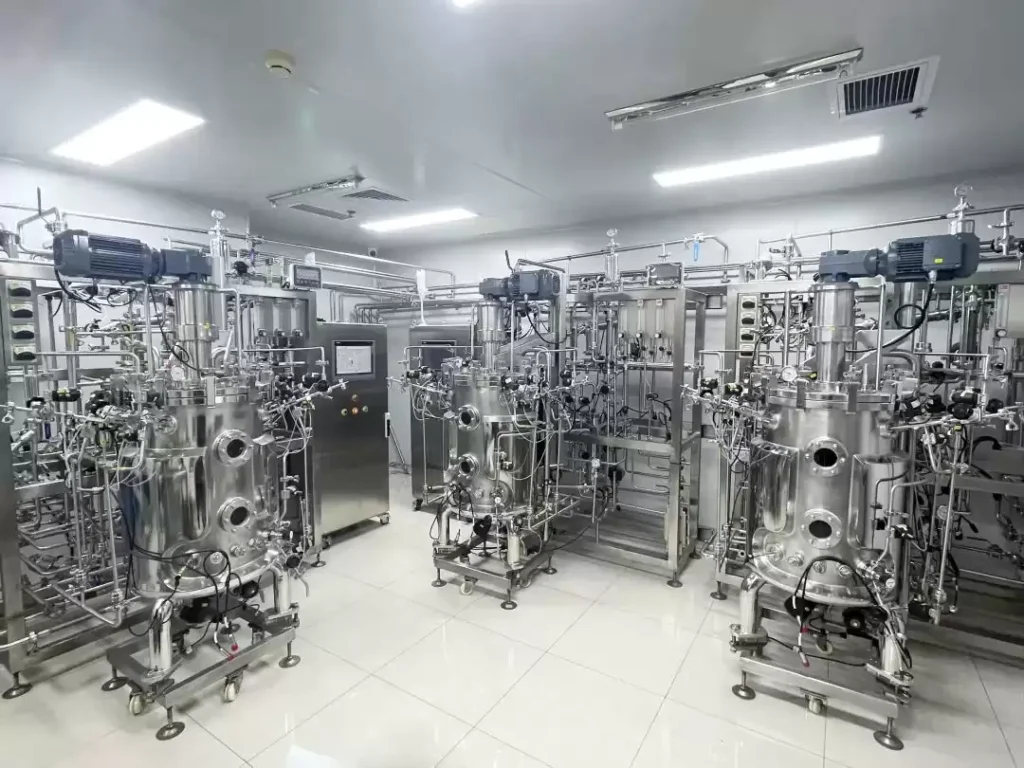
Over the past 20 years, the biomanufacturing industry has made great improvements in process control. Mainly using computer online control on the stirred bioreactor, it is equipped with online sensors such as pH electrode, dissolved oxygen electrode, exhaust gas spectrometer, and living cell sensor to realize the measurement of viable cell amount, glucose, lactic acid, ammonia and glutamine. Collection of various parameters such as the concentration of extracellular metabolites. As PAT process control technology becomes increasingly mature, online sensors are combined with system models of cell physiological status, and omics technology is introduced. By establishing process data processing methods to classify and in-depth analyze the data, data-driven guidance of the process can be achieved. Control and ensure product quality. After years of research, Zhang Siliang and others proposed a theory based on multi-scale correlation parameter analysis of genes, cells and reactors. The complex biological processes in bioreactors are divided into gene scale, cell scale and bioreactor scale. There are information flow, material flow and energy flow between different scales. By studying the nonlinear relationship between them and the impact on the entire system, we can find ways to solve the optimization and amplification of the process.
Parameter correlation analysis refers to the coupling correlation between environmental parameters and physiological parameters, state parameters and process parameters, direct parameters and indirect parameters, online parameters and offline parameters in biological processes. Implementing multi-scale parameter correlation analysis involves several important steps:
❶ Simplify the system and collect variables during the cultivation process through the data acquisition system, and then conduct data-driven research to analyze the relationship between each parameter and observe across scales. These steps are a multi-scale research method to achieve cell metabolism analysis and control. It can be seen that online monitoring of biological processes and obtaining a large number of online parameters are important steps to achieve multi-scale correlation analysis. However, these parameters exhibit discrete, complex, and nonlinear characteristics, which are mainly due to the combined effects of complex cellular metabolism and responses to the environment. Some subtle differences in the way biological processes proceed can produce huge differences in the results, demonstrating instability in the system. To this end, it is necessary to shift from macro-physiological metabolism (correlation between parameters at different scales) to micro-physiological metabolism (genome, transcriptome, proteome, metabolome) in order to better optimize and amplify biological processes.
❷Further optimize and amplify biological processes by correlating cell physiological metabolic characteristics with bioreactor flow field characteristics. The amplification of biological processes consists in transitioning from laboratory-scale bioreactors to large-scale bioreactors and reproducing the optimal physiological state of cells. Therefore, obtaining changes in key parameters in small-scale reactors can enhance the success of process scale-up. In this process, the flow field characteristics of the bioreactor need to be studied.
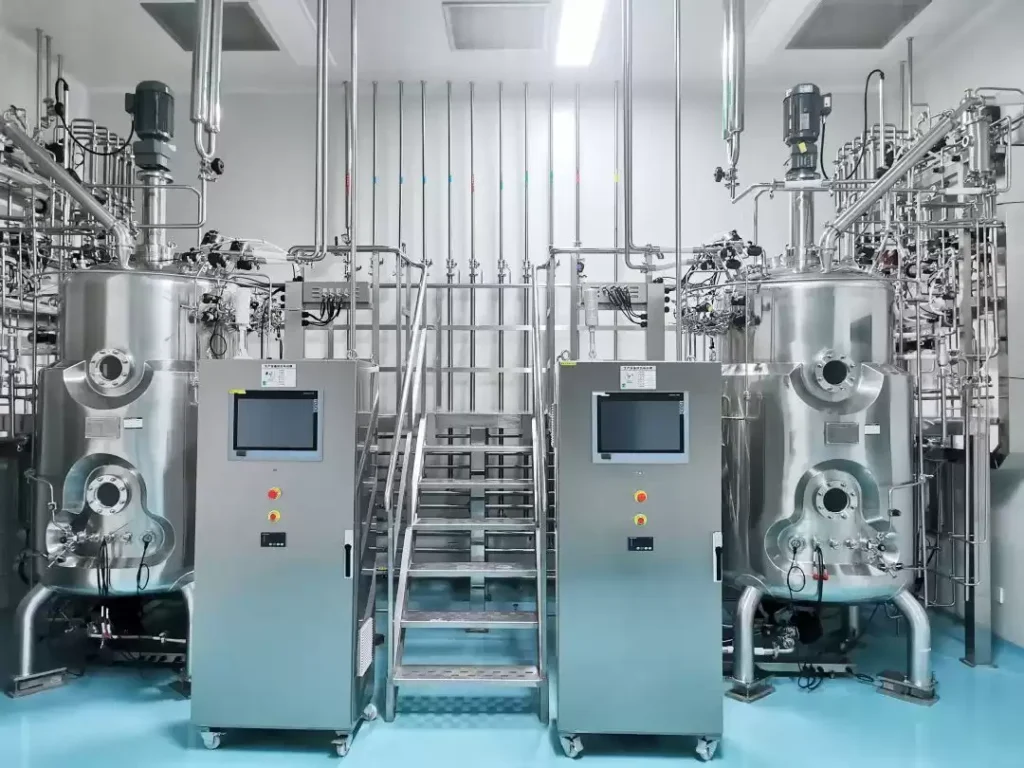
●Intelligent manufacturing of large-scale cell culture processes
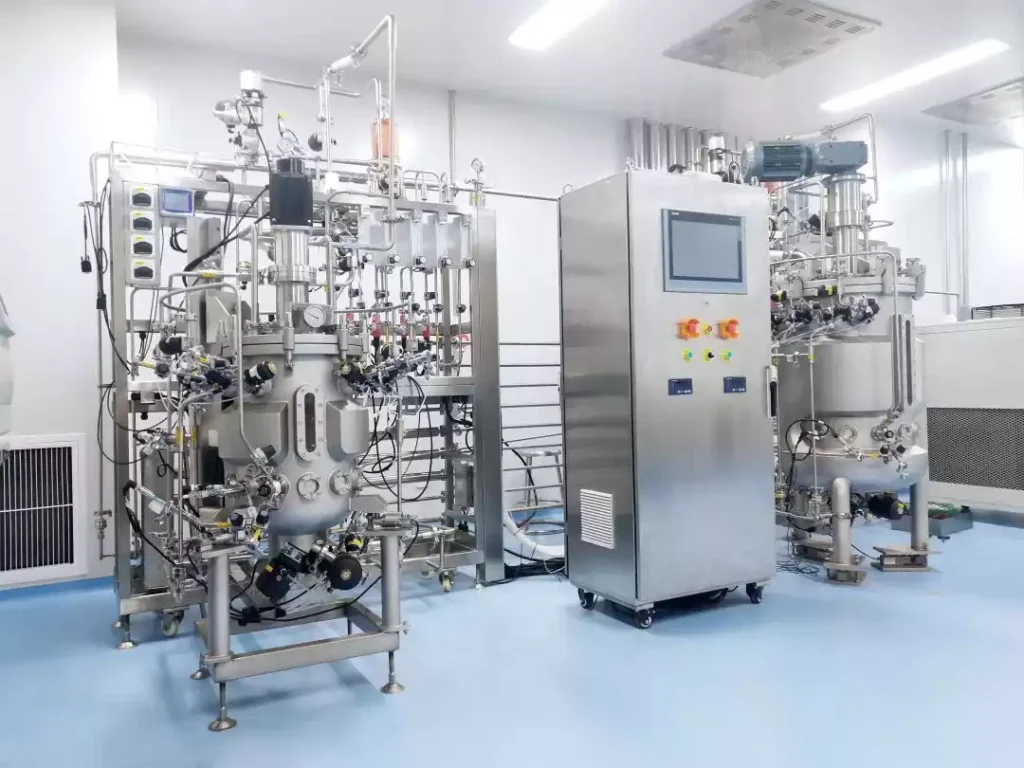
In large-scale animal cell culture, the biological reaction process of living cells has complex physiological and metabolic characteristics, so it is crucial to conduct multi-scale related parameter analysis of the cell culture process in bioreactors. However, the application of this theory in the era of big data still has some limitations. In the actual production process, it is extremely difficult to process the massive data generated during multi-scale parameter analysis of cells and the various sensor data obtained during the reaction process. It is necessary to find the key causal relationships in these data and propose corresponding process optimization strategies. It is a time-consuming and laborious task for manual processing. Therefore, machine learning needs to be applied to the analysis and decision-making of biological process big data.
Facing the large-scale and diversified culture of animal cell lines, we can develop various new animal cell reactors, formulate personalized and parallel culture strategies, and achieve intelligent control of the culture process. Bioreactor coupled online sensors, especially spectral sensors, such as online Raman analyzers, online mid-infrared analyzers, and online fluorescence analyzers are gradually being used in industrial process analysis. In the implementation of multi-scale biological process optimization, a large amount of data will be generated through online Raman spectroscopy, online fluorescence spectroscopy and online mid-infrared spectroscopy. In particular, the online data contains a large amount of process-related information. In the future, literature data and omics data can be used to form knowledge. Atlas, and through machine deep learning, guide the cell culture process. In 2018, the “Fully Automatic Stem Cell Induction and Culture Equipment” was successfully developed. For the first time, automated cell induction based on machine learning and artificial intelligence algorithms was realized. The equipment technology for picking and equipment control realizes the functions of automated induction culture, amplification, imaging, downstream differentiation and other functions of induced multifunctional stem cells. It reduces the cost of stem cell production while improving the quality of cell preparation, laying the foundation for the production of large-scale biological products. foundation.
The era of big data has arrived. Intelligent biomanufacturing based on big data is in line with the development trend of the biomanufacturing industry. With the continuous development of biosensing technology, more and more biological process data can be obtained. Through artificial intelligence processing, the relationship between information flows at different scales can be mined from the data to achieve truly intelligent biological manufacturing.