
Structural properties and sources of DHA
Physiological functions of DHA
Market prospects of DHA
Current research status of DHA accumulation by Schizochytrium fungi
◆Structural properties and sources of DHA
Polyunsaturated fatty acids are straight-chain fatty acids with two or more C=C and a carbon chain length of 18-22 carbon atoms. They are usually divided into ω according to the position of the carbon atom of the double bond farthest from the carboxyl group. -3 series, ω-6 series and ω-9 series. Polyunsaturated fatty acids play a very important role in human health. Common omega-6 series polyunsaturated fatty acids include γ-linoleic acid (18:3 n-6, GLA) and arachidonic acid (20:4 n- 6, AA), ω-3 series polyunsaturated fatty acids include α-linoleic acid (18:3 n-3, ALA) eicosapentaenoic acid (20:5 n-3, EPA) and eicosapentaenoic acid Hexaenoic acid (22:6 n-3, DHA), among which DHA has multiple physiological functions such as promoting visual nerve development, preventing cardiovascular diseases, and promoting immune regulation.
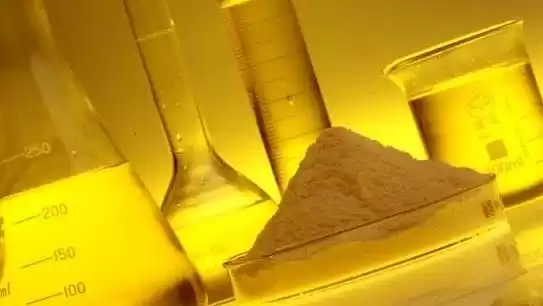
The molecular formula of DHA is C22H32O2. The relative molecular mass at 25℃ and 100 kPa is 328.488. The structural formula is shown in Figure 1-1. The system is named full cis Δ-4, 7, 10, 13, 16, 19-docosahexane. enoic acid. DHA has a melting point of -44°C and a boiling point of 447°C. It is liquid at room temperature, colorless, odorless, and insoluble in water. There is a “pentene double bond” structure in the DHA molecule, which contains 6 C=C and 5 methylene groups. These structures make DHA extremely susceptible to chemical reactions such as oxidation and rancidity, so it needs to be stored at low temperature and isolated from oxygen.

DHA is an indispensable polyunsaturated fatty acid in the human body. However, the DHA synthesized by the human body itself cannot meet the needs of the body, so it needs to be taken in appropriate amounts from food. Common rapeseed oil, flaxseed oil and vegetable oil only contain fatty acids such as GLA and ALA. Although the human body can convert them into DHA, the conversion rate is only 2-10%, so it needs to be ingested in appropriate amounts from the outside to meet the body’s needs. . Fish oil produced through the processing of deep-sea fish resources is a traditional source of DHA, especially fish oils such as tuna and squid, which are very rich in DHA.
However, as people’s health awareness increases, the market demand for DHA is increasing day by day. Indiscriminate fishing has led to a sharp decline in the number of wild fish worldwide. The scarcity of deep-sea fish resources cannot meet the market demand. At the same time, there is also a shortage of DHA obtained from fish resources. gradually emerged.
First of all, the quality of fish oil is affected by the season and geographical location, and there are certain restrictions on fishing time, resulting in unstable fish oil production; secondly, the fatty acid composition of fish oil is complex, and the extraction, separation and processing technology is cumbersome, which increases the production cost of DHA, and The EPA in fish oil will affect the ability of infants and young children to absorb nutrients, narrowing the application scope of DHA derived from fish oil; thirdly, the cholesterol content in fish oil is high and has a fishy smell that is not easily accepted by people, making it difficult to remove during processing. Removal brings great challenges to the downstream purification process; finally, in recent years, oil spills and industrial wastewater have caused serious pollution to the marine environment. The accumulation of heavy metals through the food chain has led to excessive heavy metals in fish oil, which is not good for human health.
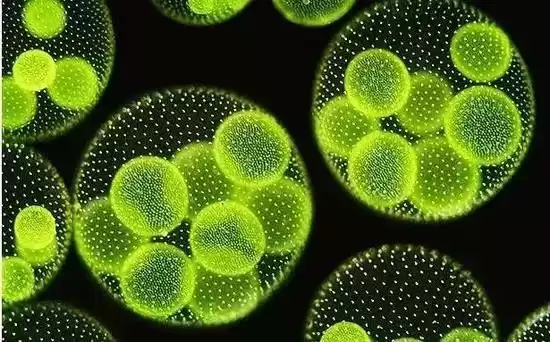
Studies have found that marine fish have very weak ability to synthesize DHA themselves. The DHA in deep-sea fish oil comes from original producers such as plankton and marine algae. DHA is passed through the food chain and accumulated in the fat of deep-sea fish, so microalgae have become an emerging source of DHA. It is estimated that the annual global production of marine microalgae can reach more than 300 billion tons. There are many types of DHA-rich microalgae, up to hundreds of species, including chrysophytes, diatoms, dinoflagellates, brown algae, red algae, and cryptophytes. and green algae, etc. Although the fatty acid content of microalgae will vary with different culture conditions and growth stages, the use of marine microalgae to produce DHA has the following advantages compared with fish resources:
❶Microalgae cultivation technology is relatively mature, simple to operate, controllable fermentation conditions, and can be cultured at high density. It will not affect the quality of algal oil due to differences in seasons and geographical locations.
❷Genetic engineering means can be used to screen strains with high DHA production, and metabolic control means can be used to control the fatty acid composition of algal oil, making the fatty acid composition of algal oil relatively simple, easy for downstream extraction and separation, and reducing the cost of the purification process.
❸Compared with fish oil, algae oil has no fishy smell, and avoids the risk of heavy metal contamination. The safety of the product is greatly improved, and algae oil does not contain cholesterol, which has relatively little impact on the application of the product.
❹The use of marine microalgae to produce DHA-rich algal oil can alleviate problems such as overfishing and scarcity of fish resources due to the dramatic expansion of market demand.
◆Physiological functions of DHA
DHA is an indispensable polyunsaturated fatty acid for the human body. It is known as “brain gold”. It has various functions in preventing and treating cardiovascular and cerebrovascular diseases, improving vision, regulating retinal development, anti-tumor, anti-inflammatory and anti-thrombosis. Very important effect. With the development of science, research on the functions of DHA has gradually deepened, as follows:
❶ prevention and treatment of cardiovascular diseases
❷promotion of brain and nerve development
❸improvement of retinal function
❹ anti-tumor and anti-inflammatory effects
❺Relieves depression (6) Prevents Alzheimer’s disease, etc.
◆Market prospects of DHA
The application of DHA is mainly reflected in three aspects: food, medicine and feed. The specific contents are as follows:
❶DHA applications in food
The recommended intake of omega-3 PUFAs in the human diet is 350 mg DHA+EPA per person per day, which is achieved through a daily intake of 230 g of carp and 215 g of Penaeus monodon. Since it is impossible to ensure that you consume sufficient amounts of seafood every day, it is necessary to supplement your diet with DHA. There are currently many types of foods on the market that use DHA as a nutritional additive. In recent years, in order to meet people’s increasing health needs, edible oil products, eggs and meat products with DHA have appeared. In addition, DHA is used in solid drinks, cheese, rice cakes It has also been widely used in snack food industries.
❷Application of DHA in the pharmaceutical industry
In my country, pregnant women, the elderly and patients with special diseases generally lack the intake of unsaturated fatty acids and protein. In 1993, the World Health Organization (WHO) and the Food and Agriculture Organization of the United Nations (FAO) jointly stated that the current proportion of fatty acid intake among Chinese residents is unbalanced, and the dietary intake of DHA and EPA is seriously insufficient. The International Society for the Study of Fatty Acids and Lipids (ISSFAL) recommends a total daily intake of DHA and EPA for adults of 500 mg. However, the current average intake of DHA and EPA for Chinese adults is only 37.6 mg·d-1. With the The scientific research on DHA continues to deepen. DHA’s physiological functions such as anti-cancer and anti-inflammatory, improving memory, and preventing cardiovascular and cerebrovascular diseases have attracted much attention. DHA on the health care product market mostly appears in the form of hard capsules, soft capsules, microcapsules, and granules. , the DHA content is between 20-80%. Currently, DHA has been used in the research and development of drugs to prevent and treat Alzheimer’s disease, depression and other diseases.
❸Application of DHA in feed industry
My country is the largest country in the aquaculture industry and has a huge aquaculture market. The quality of feed is a key factor affecting aquaculture. Studies have shown that adding DHA to aquatic feed can effectively improve seedling survival rate, growth rate, protein conversion rate and resistance. disease resistance and enhance the immune function of aquatic organisms. In terms of animal breeding, the demand for poultry and livestock feed in my country is also relatively large. Adding DHA to the feed can prevent pigs, cattle, sheep and other young animals from developing symptoms such as stunted development and reduced resistance, and greatly improve the health of livestock young. Moreover, feeding chickens, sheep, pigs, etc. with DHA-added feed can produce DHA-rich eggs, goat milk, and pork, improving the nutritional value of related foods.
◆Current research status of DHA accumulation by Schizochytrium fungi
The process of Schizochytrium fermentation to produce DHA is relatively mature. How to further improve DHA production efficiency and reduce production costs has been the focus of research in recent years. The process of Schizochytrium fermentation to produce DHA can be divided into strain screening, fermentation control, high-density fermentation, cell acquisition, oil extraction and purification. In order to improve the fermentation level of Schizochytrium, current research mainly focuses on the improvement of strain performance, metabolic regulation through molecular manipulation in combination with the DHA synthesis pathway, optimization of the fermentation process, and extraction and purification of oils.