
The fermentation performance of closed solid-state fermentation systems depends to a large extent on factors such as mass transfer phenomena, biological reaction rates, and the design and operation of effective bioreactor systems. It is very important to accurately control various factors to the appropriate range.
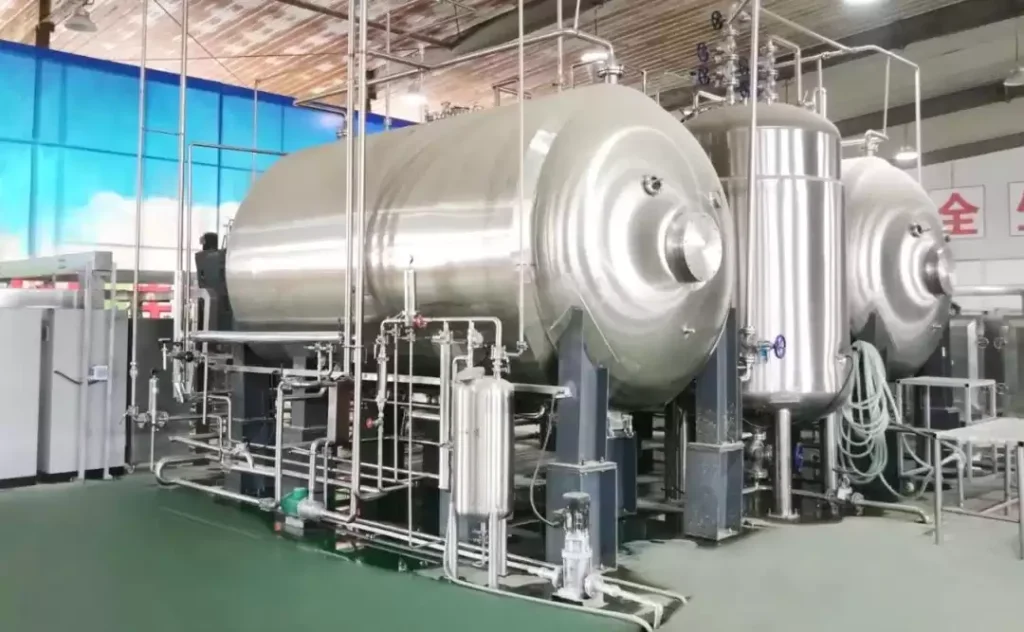
◆Factors affecting the performance of closed solid-state fermentation
❶Degree of stirring or mixing
Stirring is helpful to ensure bed temperature, humidity, etc., and can also promote mass and heat transfer within the fermentation system. However, stirring will also break the hyphae, affect the growth of microorganisms, and even affect the synthesis of metabolites.
Most filamentous fungi are sensitive to shear force. Therefore, when selecting a closed fermentation system with a stirring device, in addition to considering the number of stirring times, stirring time, and stirring intensity, you also need to consider whether the stirring will affect the microorganisms or the final product. yield.
❷Particle size and porosity
The particle size of the solid fermentation matrix is related to the specific surface area and bulk density of the material. During the aerobic solid-state fermentation process, microbial growth generally starts from the surface of the particles and gradually penetrates into the interior of the particles. The larger specific surface area is conducive to the growth of microorganisms and the acquisition of nutrients. Particles that are too small will make the material too dense, making oxygen a limiting factor for growth.
In addition, the size of the particles will also affect the porosity of the solid fermentation matrix, thereby affecting material transfer. The pores between particles mainly affect the diffusion of gas, and the impact on microorganisms is also complex. For example, it affects whether the enzymes produced by microorganisms or added hydrolases can penetrate into the particles and play a role. It also affects whether microorganisms can enter and grow inside the particles.
❸Matrix nutrients
The solid fermentation matrix provides microorganisms with necessary nutrients such as carbon, nitrogen, phosphorus and trace inorganic elements to maintain the life activities of microorganisms and synthesize extracellular metabolites, which has an important impact on the viability of microorganisms.
The carbon-nitrogen ratio is also one of the important factors affecting microbial growth and metabolite production. If the nitrogen content in the solid fermentation matrix is too high or too low, it will affect the growth and metabolism of microorganisms. Different types of microorganisms require different carbon-nitrogen ratios.
Therefore, in the solid fermentation matrix used to cultivate microorganisms, the carbon-nitrogen ratio should be maintained within an appropriate range to ensure that there are sufficient nutrients for their growth and metabolism.
❹Temperature
In a closed solid-state fermentation system, a large amount of metabolic heat will be generated as fermentation proceeds. High temperature has a negative impact on microbial growth and product formation, while low temperature is not conducive to microbial growth and biochemical reactions.
Since various fermentation systems have different heat dissipation efficiencies, the temperature that can be achieved depends on the complex interaction between the microorganisms and the type of fermentation system and its operation method. Therefore, how to control the impact of the temperature of the fermentation system on microorganisms and solve the problem of heat generation and heat dissipation in the substrate bed plays a vital role in improving the production performance of the closed solid-state fermentation system.
❺Ventilation
Aeration is a very important parameter in a closed solid-state fermentation system. It can maintain aerobic conditions in a closed solid-state fermentation system, remove carbon dioxide in the substrate bed, control the temperature in the substrate bed, and maintain the humidity of the substrate bed.
However, if unsaturated air is introduced into a closed solid-state fermentation system, it will cause strong evaporation of the substrate bed, aggravate the water loss of the solid-state fermentation substrate, and inhibit the growth and metabolism of microorganisms. Therefore, great attention must be paid to this issue during ventilation.
❻Microbial selection
The selection of microorganisms may have the most important impact on the fermentation performance of closed solid-state fermentation systems. This is not only because the selection of microorganisms determines the final product of the fermentation, but also because fermentation performance varies with the morphology and growth pattern of the microorganisms.
For example, some filamentous fungi, such as Rhizopus oryzae, can form thick hyphal layers that reduce oxygen and heat transfer between the environment and the substrate. As a result, the consumption of oxygen and the accumulation of metabolic heat in the matrix make the environment unfavorable for the growth of microorganisms, thereby damaging the performance of the fermentation.
Therefore, the optimal microbial selection will depend on the type of solid-state fermentation substrate, growth requirements, and target end products.
❼Moisture content and water activity
Usually the water requirement of microorganisms should be defined in terms of water activity (Aw) rather than the water content of the solid substrate. Water activity directly affects the type and number of microorganisms that can grow during solid-state fermentation, thereby affecting the final output of microbial metabolites.
In the solid-state fermentation process, different microorganisms require different water activity values. If the water activity value is low, it will affect the growth of microorganisms and reduce production. On the contrary, if it is too high, it will lead to the aggregation of solid matrix particles, which will limit oxygen transfer and lead to a decrease in the production of microbial metabolites. Therefore, it is very important to adjust the water activity value to the appropriate range.
❽Self-design of fermentation system
During the entire fermentation process, no substances are added to the solid fermentation substrate except oxygen, ensuring that the growth environment of microorganisms is maintained in an ideal state.
Although the composition and concentration of solid-state fermentation substrates are usually changed due to microbial metabolism, some parameters in solid-state fermentation systems, such as oxygen and metabolic heat transfer, need to be controlled by controlling aeration, stirring, moisture content, temperature and the microorganisms used. The type of solid fermentation substrate is managed to ensure that the entire fermentation process proceeds smoothly.
Therefore, each specific fermentation process requires specific design and appropriate fermentation parameters to ensure the effectiveness and reliability of the closed solid-state fermentation system.
◆Optimization and regulation of closed solid-state fermentation system
Optimum process parameter values can maximize cell growth and metabolite production. Therefore, it is particularly important to optimize and regulate closed solid-state fermentation systems.
❶PID (proportional-integral-derivative) control
In many large-scale closed solid-state fermentation systems, stirring and convective cooling cannot remove more than 50% of the metabolic heat, and the remaining 50% of heat can only be removed by other means. Therefore, evaporative cooling is the most effective way to remove metabolic heat.
When large-scale closed solid-state fermentation systems use evaporative cooling, the dynamic response and control configuration of the process will become very complex. Usually, such a process cannot be controlled by the PID algorithm alone, and this process requires a long time to respond to changes in operating variables, which brings great difficulties to PID tuning.
In addition, the dynamic response of the system is nonlinear, and the response of the fermentation system is not consistent throughout the fermentation time. This situation will cause the PID tuning parameters to be only applicable for a period of time, so the PID parameter settings need to be changed frequently. To achieve optimal performance in these complex situations, model-based control methods are necessary.
❷Mathematical modeling optimization
Mathematical modeling is an essential tool for optimizing biological processes, not only to guide the design and operation of closed solid-state fermentation systems, but also to provide insights into how various phenomena within the fermentation system combine to control the overall process.
Some researchers have simulated oxygen consumption, heat production and cell growth in solid-state fermentation systems through mathematical models, which will help to better understand the migration process of solid-state fermentation, thereby helping to optimize the design of closed solid-state fermentation systems.
At present, mathematical models have reached a level of maturity. Only by using mathematical models as tools in the design process and optimization operations can the solid-state fermentation system fully realize its potential, thereby maximizing the economic performance of the solid-state fermentation process.
◆Conclusion
With the continuous advancement of modern biotechnology and monitoring methods, closed solid-state fermentation systems will become more automated and intelligent, monitoring tools and automatic control systems will be further optimized, and fermentation control will become more precise.