
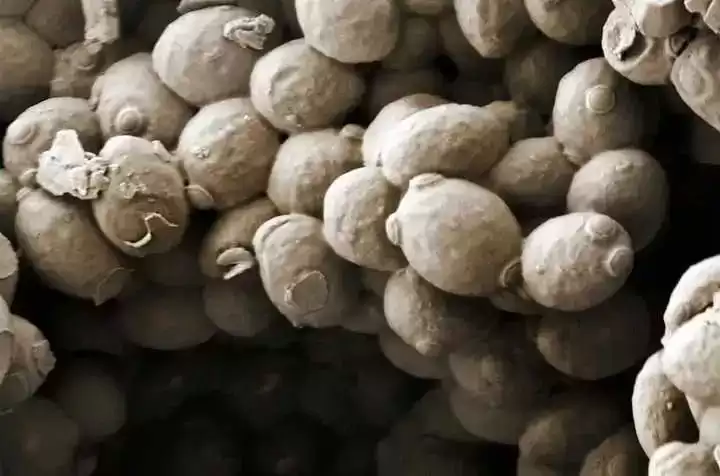
Saccharomyces cerevisiae has a simple morphology and high safety, and can be used as a starting strain in bioproduct synthesis. Ordinary biotechnology fermentation consumes a lot of energy and has a low product acquisition rate, resulting in a large amount of waste of raw materials. Therefore, it is necessary to optimize the fermentation process to improve the utilization rate of fermentation raw materials, thereby increasing the content of the target product, achieving the purpose of saving production costs and improving product quality.
◆Overview of Saccharomyces cerevisiae and Fermentation Technology
Saccharomyces cerevisiae is a single-celled eukaryotic microorganism with a large form. The size of commonly used yeast is 1~5μm or 5~20μm, most of which are spherical, oval, etc., and have good growth performance and fermentation. Saccharomyces cerevisiae requires simple nutrients, a short growth cycle, and fast cell metabolism during the growth process. It has good tolerance to stress environments during the fermentation process. It still has good fermentation performance when subjected to stress pressures such as temperature and pH value. It can metabolize more metabolites and has a short fermentation cycle. It is mostly used in the production process of the biological industry.
Saccharomyces cerevisiae is an attractive chassis cell that can grow at low pH and under various harsh environmental conditions. The whole genome sequencing of Saccharomyces cerevisiae is relatively complete. As an engineering strain, it produces a series of metabolites through microbial fermentation technology. Saccharomyces cerevisiae fermentation technology uses Saccharomyces cerevisiae as an engineering strain and selects a suitable culture medium, that is, carbon sources, nitrogen sources, inorganic salts and other nutritional factors for fermentation. Through growth and fermentation, a large number of Saccharomyces cerevisiae cells are produced, and also Produces a large amount of metabolites. Saccharomyces cerevisiae is highly safe and can be used as a host to express foreign genes. It can be used as a cell factory to produce various substances such as drugs, antioxidants, ethanol, and feed additives, allowing the biological industry to flourish. Studies have shown that the metabolites of Saccharomyces cerevisiae are helpful in treating diseases and have become a hot spot in current research.
◆Overview of high-density fermentation technology
High-density fermentation, also known as high-cell density fermentation, refers to optimizing bacterial culture conditions by regulating fermentation conditions on the basis of ordinary fermentation. A technology that allows bacteria to grow and reproduce in large quantities and produce more metabolites. In the process of microbial fermentation, the application of high-density fermentation technology is gradually becoming more widespread. Normally, during the fermentation process, the density of the fermentation liquid is considered to be 20-200 g/L as high-density fermentation. However, the microbial fermentation process will be affected by the strain itself, the culture medium, and the production process. It is not easy to achieve high-density fermentation. Only through continuous testing and understanding of the fermentation performance of the strain can high-density fermentation be achieved.
◆Research progress on high-density fermentation technology of Saccharomyces cerevisiae
In addition to reducing costs and increasing efficiency, high-density fermentation technology can also improve the utilization rate of raw materials, reduce energy consumption, and reduce environmental pollution. Changes in single factors such as strains, culture media, and production processes can affect the results of high-density fermentation technology, affecting the amount of product produced and the stability of strain growth. Many products can be produced using high-density fermentation technology of Saccharomyces cerevisiae.
❶Research on the application of Saccharomyces cerevisiae high-density fermentation technology in animal nutrition
Saccharomyces cerevisiae high-density fermentation technology can be used to produce yeast culture, and yeast culture can be used as a single feed ingredient in animal production and is increasingly widely used in ruminant, monogastric, poultry and aquatic animal breeding.
The high-density fermentation technology of Saccharomyces cerevisiae can be used to produce glutathione (GSH), which can be used in animal feed to play an antioxidant role. GSH can act as an antioxidant, scavenging excess free radicals in the animal body. GSH also has immune function and plays a huge role in maintaining the stability of the immune environment of the animal body. In addition, GSH also has the function of detoxification. It can combine with harmful substances in the body and promote their elimination from the body, thereby achieving detoxification.
❷Application research on other aspects of high-density fermentation technology of Saccharomyces cerevisiae
Saccharomyces cerevisiae high-density fermentation technology can be applied in the synthesis of various products such as medicine and food. When Wang Jiepeng et al. used Saccharomyces cerevisiae to produce S-adenosylmethionine, they achieved high-density fermentation by changing the supplementation strategy of the precursor substance L-methionine, increasing the production of S-adenosylmethionine to 14.48 g/L. Han Jianshuai produced ethanol by optimizing high-density fermentation conditions, increasing the ethanol concentration by 22.47%. Shi Mingyu used Saccharomyces cerevisiae to produce lycopene, and through high-density fermentation technology, the yield was increased from 13.23mg/L to 135.21mg/L (10.2 times). Zhao Xiaoli et al.[In order to determine the high-density fermentation conditions of Saccharomyces cerevisiae, molasses was selected as the fermentation carbon source, and single factor and orthogonal experiments were conducted to determine the optimal fermentation conditions, so that the dry weight of the bacteria reached 9.63 g/L.
Outlook: Saccharomyces cerevisiae is a widely used microbial fermentation engineering strain. Research on high-density fermentation technology of Saccharomyces cerevisiae can solve problems such as low yield and low utilization of raw materials in the production process. High-density fermentation is usually achieved through optimization of production processes, such as selecting different feeding methods and regulating feeding rates. This stimulates the accumulation of target products, thereby achieving high-density fermentation.